
The way large organizations communicate has fundamentally shifted. Since 2020, hybrid and remote work arrangements have moved from emergency measures to permanent fixtures, creating a distributed workforce that spans continents, time zones, and living rooms. This transformation has exposed the limitations of legacy communication systems—fragmented tools, siloed channels, and manual processes that simply cannot keep pace with modern business demands. In contrast, a modern communication system is a comprehensive, integrated platform that combines voice, video, messaging, and collaboration tools to enhance enterprise collaboration, security, and productivity across the organization. Enterprise communications solutions have become essential for organizations seeking to unify these tools and streamline communication at scale.
This guide is designed for IT leaders, internal communications professionals, and HR managers in large organizations. Effective enterprise communications are critical for productivity, compliance, and employee engagement in today’s distributed work environment. By understanding the latest tools, trends, and tactics, you can ensure your organization remains agile, secure, and connected.
Enterprise communications solutions have emerged as the answer. These integrated platforms combine voice, video, messaging, and collaboration tools into unified systems that reach every employee, regardless of location. For large organizations specifically, the imperative has evolved beyond mere connectivity to automation—the ability to broadcast critical updates, policy changes, and cultural messages without requiring manual intervention for every send.
One of the most powerful yet often overlooked channels in this mix is screensaver communication on corporate devices. When a laptop locks or sits idle, that screen becomes prime real estate for delivering targeted messages to employees at home or in the office. Unlike email that gets buried or chat notifications that get snoozed, a screensaver campaign reaches employees passively, ensuring visibility without workflow interruption. This guide will walk you through the tools, infrastructure, and best practices that define effective enterprise communication in 2026, aligning with broader future trends in corporate communication.
TL;DR: What Enterprises Need From Communication Solutions in 2026
The following list summarizes the essential requirements for enterprise communications solutions in 2026:
- Unified messaging platforms that consolidate chat, video, voice, and file sharing into a single interface, eliminating the fragmentation that slows decision-making
- Alignment with business objectives, ensuring that communication solutions directly support broader company goals such as improving customer service, internal collaboration, and operational efficiency
- Security and compliance built into every layer, including end-to-end encryption, role-based access, and audit-ready logging for regulatory requirements
- Automation capabilities that schedule, sequence, and target communications across multiple channels without manual effort for each campaign
- Full mobile access and remote workforce support, ensuring frontline and home-based employees receive the same information as headquarters staff
- Enhanced employee engagement through consistent, multi-channel messaging that builds culture and reduces the “out of the loop” feeling for distributed teams
- Automated, visual communication to every employee screen—including screensavers and locked devices—as a must-have for large organizations reaching workers at home
This article covers evaluation criteria, infrastructure choices (cloud vs on-prem/hybrid), and best-practice rollouts for enterprises at scale. Next, we’ll examine the high costs of ineffective enterprise communication and why modern solutions are essential.
The Cost of Ineffective Enterprise Communication
Poor communication isn’t just inconvenient—it’s expensive. According to 2025 surveys, communication failures contribute to 86% of workplace issues, manifesting as missed deadlines, project overruns, duplicated work, and compliance gaps that expose organizations to regulatory risk.
Key impacts of ineffective communication include:
- Distributed and remote teams suffer disproportionately when communication breaks down. A global team spanning North America and Europe may rely on asynchronous updates, and when those updates fail to reach the right people at the right time, entire projects stall while employees wait for clarification or make decisions based on outdated information.
- Disengagement and attrition follow poor communication patterns. Gallup-style research consistently shows that employees who feel disconnected from company news and leadership demonstrate 20–25% lower productivity than their engaged counterparts. The cost compounds when those employees leave, taking institutional knowledge with them.
- Email-only strategies fail at scale. When your organization has tens of thousands of employees, inboxes become graveyards of missed critical updates. Message duplication across threads creates confusion, and the sheer volume of messages trains employees to skim or ignore corporate communications entirely.
- These failures point to a clear need: structured, multi-channel enterprise communications solutions that include “ambient” channels like screensavers and digital signage—surfaces that reach employees without requiring them to actively check anything. Adopting cloud-based platforms that streamline team communication across every screen can also deliver significant cost savings by reducing inefficiencies and administrative overhead.
To address these costly challenges, organizations are turning to modern enterprise communications solutions, which are explored in the next section.
What Are Enterprise Communications Solutions?
Enterprise communication refers to the various tools, practices, and strategies used by organizations to facilitate effective communication and collaboration among employees, teams, and departments.
Enterprise communications solutions are integrated stacks of tools, processes, and governance frameworks designed to enable seamless internal and external communications at organizational scale. Enterprise communication systems unify multiple communication tools into a single platform. Unlike consumer messaging apps or small-business tools, these solutions are built to handle the complexity of large organizations with thousands of users, multiple regions, and strict compliance requirements.
Unified Communications (UC) integrates voice, video, instant messaging, and email into a single interface, providing a seamless experience for users and reducing the need to switch between multiple applications.
The scope extends beyond simple messaging. These systems handle leadership updates and HR policy distribution, project collaboration across departments, customer and partner communications, and vendor coordination—all within a governed, auditable framework. Enterprise communication software supports these functions by centralizing and streamlining communication across the organization, integrating various channels into a unified platform to improve collaboration, information sharing, and overall efficiency.
Key Characteristics of Enterprise Communications Solutions
- More than chat apps: A complete solution combines voice calling, video conferencing, instant messaging, file sharing, project communication, screensaver messaging, and analytics into a cohesive system.
- Global scale: Large organizations require global scale (tens of thousands of users), role-based access controls, regional data residency compliance (critical for EU operations in 2026), and 24/7 availability across time zones.
- Ecosystem distinction: “Enterprise communications solutions” refers to the full ecosystem of tools, policies, and processes, while a “unified communications platform” describes the core technology layer that enables real-time collaboration.

As we move forward, we’ll explore the core features that define modern enterprise communications solutions and how they address the needs of large organizations.
7 Core Features of Modern Enterprise Communications Solutions
The following capabilities represent the non-negotiables for any enterprise communications system in 2026. A unified communications system is an integrated platform that consolidates calling, meetings, and messaging into a single interface, enhancing collaboration and engagement within enterprises. Each addresses specific operational requirements that large organizations face when managing distributed teams and automating communication at scale.
Unified Messaging & Collaboration Workspace
A unified communications solution consolidates chat, channels, video meetings, VoIP calling, and file sharing into a single interface. Platforms like Microsoft Teams, Slack, and Google Workspace exemplify this approach, eliminating the need for employees to switch between applications for different communication modes.
Key features include:
- Channel-based organization by department, project, or region
- Threaded discussions to keep related replies grouped together
- Integration with screensaver messages and desktop notifications for employees not actively using the app
Example use case:
For a global product launch, the coordinating team communicates via dedicated chat channels, leadership hosts a video town hall, and automated messages deploy to every employee’s desktop and screensaver on launch day, ensuring universal awareness.
Automation & Workflow Orchestration
Large companies in 2026 lean heavily on automation to avoid manually sending repeated updates, reminders, and policy changes. The labor cost of having internal comms teams manually manage every communication simply doesn’t scale.
Practical automation workflows include:
- Onboarding campaigns that automatically deliver welcome messages, policy acknowledgments, and training assignments based on hire date and role
- Recurring compliance reminders that trigger quarterly or annually without manual scheduling
- Auto-escalation of urgent IT incidents that push alerts to relevant stakeholders when issues aren’t resolved within defined SLAs
- Automated “morning brief” messages that deliver daily updates to specific teams or regions
Example 30-Day Policy Rollout:
A typical automated policy rollout might look like this:
- Day 1: Email + Intranet – Policy announcement with full documentation
- Day 3: Chat notification – Reminder with link to policy
- Day 7: Screensaver campaign – Visual summary begins displaying on idle screens
- Day 14: Email – Reminder for employees who haven’t acknowledged
- Day 21: Manager toolkit – Discussion guide for team meetings
- Day 28: Quiz + Screensaver – Knowledge check with congratulatory messaging
- Day 30: Analytics report – Completion rates by department
The most effective automation triggers content across multiple channels simultaneously, ensuring maximum reach and engagement.
Mobile & Remote Workforce Support
By 2026, many enterprises operate with 40–60% of staff remote or hybrid. Frontline workers in retail, healthcare, and logistics rely heavily on mobile devices as their primary connection to corporate communication.
Key requirements:
- Full-featured mobile apps with offline-friendly content and reliable push notifications
- Alternative channels for employees not checking corporate email throughout the day
- Mobile alerts combined with digital signage in shared spaces (break rooms, factory floors, store back offices)
Example:
A global retail chain coordinates seasonal campaign launches by pushing mobile alerts to store associates while simultaneously displaying countdown content on break-room screens.
Security, Compliance & Governance
Enterprise communication requires robust security and compliance frameworks that protect sensitive conversations and satisfy regulatory obligations.
Security expectations include:
- SSO and identity federation with corporate directories
- Multi-factor authentication for all access points
- End-to-end data encryption for sensitive conversations
- Fine-grained role-based access controlling who can create, edit, and publish content
Compliance controls:
- Retention rules, legal holds, eDiscovery, and DLP
- Regional data localization and audit-ready logging
Real-world scenario:
During a regulatory audit, your organization must demonstrate that all employees received updated Code of Conduct training. Centralized governance with time-stamped acknowledgment logs provides the evidence auditors require, while automated reminders ensure completion rates stay high.
Centralized Management, Analytics & Reporting
IT and Internal Comms teams need a single admin console to manage communication channels, permissions, and campaigns across global offices.
Key performance indicators to track:
|
Metric |
Purpose |
|---|---|
|
Message reach |
How many employees received content |
|
Read/open rates |
Engagement with specific communications |
|
Video viewing completion |
Effectiveness of recorded content |
|
Town hall attendance |
Participation in live events |
|
Mandatory-read completion |
Compliance with critical acknowledgments |
Visual dashboards should reveal which regions, departments, or remote cohorts are underinformed. To continuously improve communication effectiveness, organizations should also collect feedback from employees through surveys or interactive channels.
Screensaver and lock-screen campaigns require their own metrics:
- Impression counts (how many times content displayed)
- Unique devices reached
- Click-through rates when content links to detailed intranet pages
Integration With Business & HR Systems
Enterprise communication tools must integrate with existing systems—HRIS platforms like Workday, CRM systems like Salesforce, ITSM tools like ServiceNow, and project management tools like Jira and Asana.
Integration enables:
- Dynamic audience targeting using HR data
- Automated lifecycle events (onboarding, offboarding)
- Targeted alerts based on system events
Mini-example:
An IT outage affects the Chicago data center. The incident management system automatically identifies employees whose work depends on Chicago-hosted applications and triggers targeted alerts via chat, email, and an urgent screensaver notification—all without manual list building.
Visual Broadcast Channels: Screensavers, Digital Signage & Desktop Notices
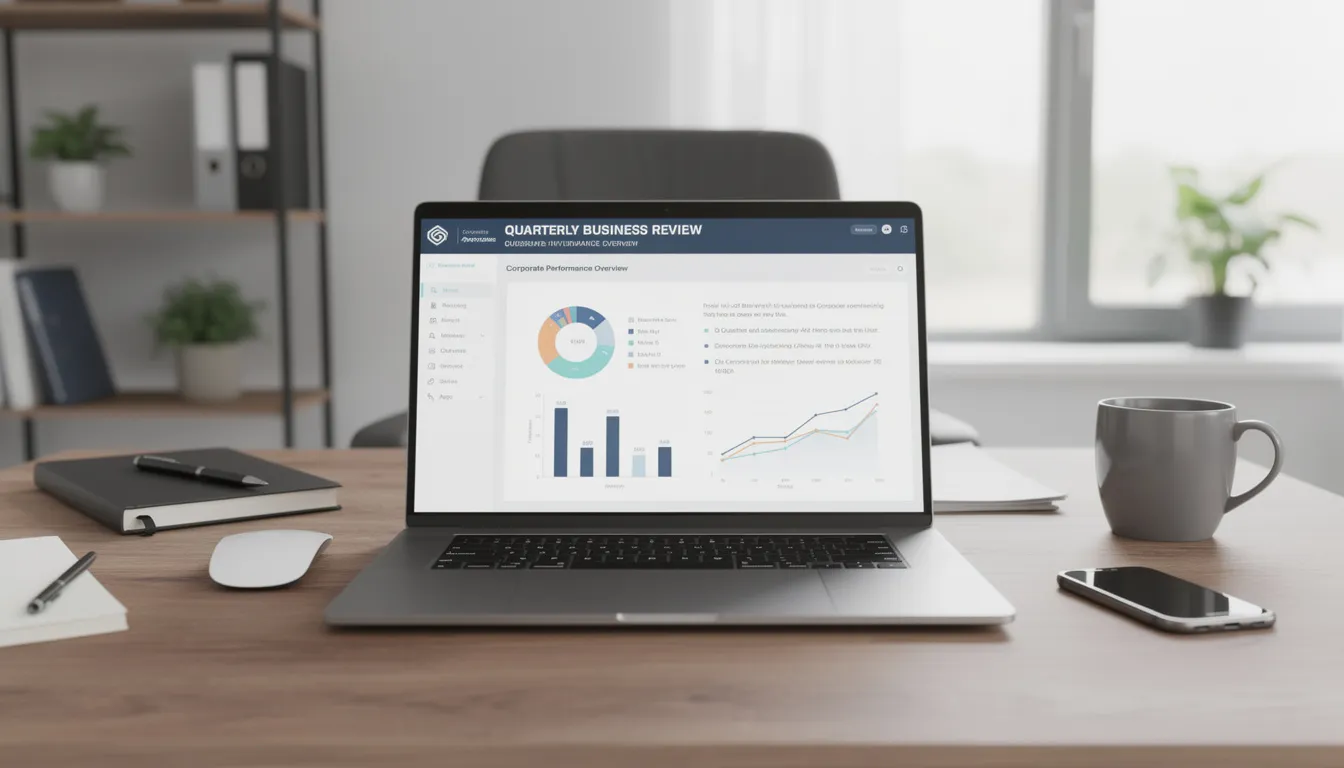
This capability addresses a gap that traditional communication tools miss. Large organizations can turn idle screens—laptops, desktops, meeting room displays—into dynamic communication surfaces that reach employees without requiring active engagement.
Content types well-suited for visual broadcast include:
- Leadership messages and CEO updates
- Safety alerts and emergency instructions
- DEI campaigns and cultural messaging
- KPI dashboards and performance highlights
- Upcoming events and registration reminders
- Cybersecurity tips and policy deadlines
- Employee recognition and team achievements
Scheduling capabilities allow precise targeting:
- Weekday campaigns that run only during local business hours
- Region-specific visuals for local holidays or regulatory requirements
- Time-bound emergency alerts that override normal content
- Rotating content that changes daily or weekly
This “ambient” communication approach ensures that even employees who rarely check email or chat still encounter critical organizational messages throughout their workday.
With these core features in mind, let’s examine the infrastructure that supports enterprise communications solutions and how deployment models impact performance and compliance.
Enterprise Communications Infrastructure: Behind the Tools
Success with enterprise communications depends on robust infrastructure, not just selecting the right apps. IT leaders and architects must consider the underlying systems that make reliable, scalable communication possible.
This includes identity management and SSO integration, network quality optimization for real-time voice and video, APIs and webhooks for system integration, and content delivery performance for rich media—including the high-resolution graphics and videos used in screensaver campaigns.
Identity, Access & Device Management
Modern enterprises rely on Azure AD/Entra ID, Okta, or similar identity providers for SSO, conditional access policies, and device-based security controls. These systems determine who can access communication platforms and under what conditions.
MDM/UEM tools like Microsoft Intune or VMware Workspace ONE manage corporate endpoints, controlling which devices receive screensaver campaigns, desktop alerts, and sensitive communications.
Automatic group synchronization ensures that communication targeting stays accurate. Zero Trust principles govern access in 2026: verify the user, verify the device, verify the context.
Network, Performance & Reliability
Quality of Service (QoS) configurations and SD-WAN deployments prioritize real-time voice and video traffic across global networks.
Content distribution strategies:
- CDNs cache content at edge locations
- Local content servers pre-stage media in on-premises environments
- Peer-to-peer distribution reduces central bandwidth requirements
SLAs target 99.95% uptime for critical communication systems. Disaster recovery planning includes failover between data centers or cloud regions and backup communication paths.
APIs, Webhooks & Custom Integrations
APIs allow enterprises to trigger communications from other systems automatically. Webhook-based event streams feed analytics platforms and data lakes, enabling near-real-time tracking of engagement across tools.
Custom integrations extend capabilities for specialized sectors:
- Healthcare organizations integrate communication alerts with EMR systems
- Manufacturing companies connect with MES platforms to broadcast production updates
- Financial services firms integrate with trading systems for time-sensitive notifications
With a solid infrastructure in place, organizations must choose the right deployment model to balance cost, control, and compliance.
Cloud, On-Premises & Hybrid Deployment Models
Enterprise communications solutions in 2026 deploy across three primary models: cloud-first, on-premises, and hybrid. Each approach offers distinct advantages depending on organizational requirements.
|
Factor |
Cloud |
On-Premises |
Hybrid |
|---|---|---|---|
|
Cost model |
OpEx subscription |
CapEx investment |
Mixed |
|
Scalability |
Rapid, elastic |
Capacity planning required |
Flexible |
|
Control |
Vendor-managed |
Full organizational control |
Selective control |
|
Compliance |
Vendor certifications |
Internal governance |
Combined approach |
|
Deployment speed |
Fast |
Slower |
Moderate |
Many large enterprises operate hybrid configurations—cloud-hosted unified communications for collaboration, with on-premises content distribution agents for secure networks or locations with limited internet connectivity.
Screensaver and endpoint-based communication typically relies on lightweight agents that function regardless of whether the backend is cloud or on-premises hosted.
Cost & Procurement Considerations
Cloud deployments shift spending from CapEx (hardware, perpetual licenses) to OpEx (subscriptions, ongoing services). This trade-off affects budgeting cycles and financial reporting.
Three-year TCO analysis should account for:
- License or subscription costs
- Support and maintenance
- Network upgrades to handle increased traffic
- Endpoint agents for visual broadcast channels
- Change management and training
- Internal administration labor
Communications automation—including screensaver campaigns that replace manual email blasts—reduces the internal comms team workload, contributing positive TCO impact beyond direct software costs.
Security, Compliance & Data Residency
Highly regulated sectors—government, defense, healthcare, financial services—may require on-premises or sovereign cloud deployments. EU data residency requirements have tightened since 2024, making regional data controls a procurement consideration rather than an afterthought.
Hybrid models allow sensitive data to remain local while leveraging cloud services for collaboration tools and less sensitive communication channels.
Regardless of deployment model, certain features are non-negotiable:
- Comprehensive audit logs
- eDiscovery export capabilities
- Compliance reporting dashboards
- Secure handling of media used in visual channels
Performance, Latency & Employee Experience
Global cloud points-of-presence reduce latency for real-time voice and video calls, but performance ultimately depends on local internet connection quality.
Monitoring practices should include:
- Synthetic tests (automated quality checks)
- Real user monitoring (actual employee experience data)
- Feedback loops on call quality and content delivery
With deployment models clarified, let’s look at the types of enterprise communication tools available and how they work together.
Types of Enterprise Communication Tools (and How They Work Together)
Enterprises rarely rely on a single tool. Instead, they orchestrate various communication tools as a cohesive system, each serving specific purposes and audience types.
Effective enterprise communication solutions in 2026 include integrated platforms like Microsoft Teams, Slack, and Google Workspace, alongside specialized tools such as Zoom, Asana, and Zendesk. The following table summarizes leading solutions and their core features:
|
Solution |
Core Features |
|---|---|
|
Microsoft Teams |
Unified chat, video meetings, file sharing, VoIP, integration with Office 365, collaboration |
|
Slack |
Channel-based messaging, integrations, file sharing, workflow automation, real-time chat |
|
Google Workspace |
Gmail, Google Chat, Meet (video), Drive (file sharing), Docs/Sheets/Slides, collaboration |
|
Zoom |
Video conferencing, webinars, chat, phone, screen sharing, meeting recording |
|
Asana |
Project management, task tracking, team collaboration, workflow automation |
|
Zendesk |
Customer support ticketing, live chat, knowledge base, multi-channel support |
Modern enterprise communication systems unify multiple communication tools into a single platform, including voice calling, video conferencing, chat, SMS, file sharing, and email. The best enterprise communication tools offer real-time collaboration features such as screen sharing, co-editing documents, and live messaging, which eliminate delays and improve alignment.
Categories of Enterprise Communication Tools:
Voice & Video Conferencing Platforms
Platforms like Zoom, Microsoft Teams, Cisco Webex Suite, and TrueConf provide the infrastructure for meetings, webinars, and virtual events. These tools have become essential for real-time collaboration among distributed teams.
Key features in 2026 include:
- HD video calls with screen sharing
- Recording and automatic transcription
- AI meeting summaries and action item extraction
- Breakout rooms for smaller group discussions
- Virtual backgrounds and noise cancellation
Use cases:
Global town halls, quarterly business reviews, remote training sessions, and daily team standups.
Integration matters: Announcements about upcoming video meetings should flow through automated channels. Email invites, chat reminders, and screensaver teasers on the day of major events ensure maximum attendance.
Team Messaging & Collaboration Hubs
Team collaboration tools like Slack, Microsoft Teams chat, Google Chat, and Mattermost provide persistent, channel-based communication for daily work.
Features include:
- Channels organized by project, department, or topic
- Threaded conversations that keep discussions organized
- File sharing integrated into conversations
- Bot integrations for automated workflows
- Polls, approvals, and forms embedded in chat
Major announcements benefit from reinforcement across channels: A leadership message might be posted to a dedicated communications channel, pinned for visibility, and simultaneously pushed to screensavers and desktop notifications.
Email, Intranets & Employee Experience Platforms
Email remains critical for formal business communication, but intranets and employee experience platforms centralize evergreen content that employees reference repeatedly.
Common platforms: SharePoint, Microsoft Viva, Workvivo
Content hosted:
- Company news and announcements
- Policy documentation
- HR resources and benefits information
- FAQs and knowledge bases
- Employee directories
Amplification: A new policy page publishes to the intranet, then email newsletters, chat notifications, and screensaver banners drive traffic to the detailed content.
Contact Center & External Communication Tools
Enterprise-grade contact center solutions—RingCentral Contact Center, Zoom Contact Center, Cisco, Genesys—handle customer interactions across voice, chat, and social media channels.
Key features:
- Advanced call routing
- CRM integration (e.g., Salesforce)
- Multi-channel support
Internal communication directly enables better customer service: Before major external launches, internal screensaver campaigns or high-priority toast notifications ensure that customer-facing staff have consistent talking points.
AI Assistants, Chatbots & Knowledge Automation
By 2026, AI chatbots handle internal FAQs, policy questions, and IT support triage for many enterprises.
AI assistants can:
- Summarize meetings and extract action items
- Suggest replies based on conversation context
- Surface relevant internal documents
- Draft announcements based on templates
- Recommend content amplification when engagement metrics lag
Example: When an AI bot notices a spike in questions about a particular policy, it can trigger a follow-up communication campaign—automatically pushing clarifications through appropriate channels including screensavers.
Visual & Environmental Communication: Screensavers & Digital Signage
Enterprise screensaver and digital signage solutions form a distinct category deserving dedicated attention. These systems transform idle screens into active communication channels.
Deployment includes:
- Lightweight agents on Windows and macOS endpoints
- Secure content feeds to lobby displays and reception areas
- Factory floor screens for operational updates
- Meeting room displays showing room schedules and company news
- Break room screens for employee communications
Content themes rotate based on organizational priorities:
|
Campaign Type |
Example Content |
|---|---|
|
Security awareness |
October 2026 Cybersecurity Month tips |
|
Health & safety |
Updated emergency procedures |
|
Culture & values |
Employee spotlights and recognition |
|
Tool adoption |
Quick tips for new software rollouts |
|
Events |
Registration reminders for town halls |
|
Compliance |
Policy deadline countdowns |
The advantage is reach. Employees who aren’t inside any communication app—particularly remote workers whose laptop screensaver activates during breaks—still encounter curated organizational messages throughout their workday.

With a clear understanding of the tools available, it’s important to recognize the common challenges organizations face when implementing enterprise communications solutions.
Common Challenges in Enterprise Communications
Enterprise communication is the backbone of organizational success, but even the most advanced companies encounter significant hurdles when trying to keep information flowing smoothly. As businesses adopt a growing array of communication tools—ranging from instant messaging platforms and video conferencing to unified communications solutions and digital workplace tools—the risk of poor communication increases if these systems are not properly integrated and managed.
Some of the most common challenges in enterprise communications include:
- Fragmentation Across Multiple Tools: Many large organizations rely on a patchwork of communication tools, including legacy email systems, team messaging apps, and specialized platforms for file sharing or project management. Without a unified communications solution, employees waste time switching between apps, leading to missed messages, duplicated efforts, and confusion about where to find critical information.
- Lack of a Clear Communication Strategy: Poor communication often stems from the absence of a well-defined strategy. When there is no guidance on which communication channels to use for specific types of messages, important updates can get lost in the noise, or employees may receive conflicting information from different sources.
- Inconsistent Adoption and Training: Even the best enterprise communication tools are only effective if employees know how to use them. Inadequate onboarding, lack of ongoing training, and resistance to change can result in uneven adoption across teams, leaving some employees out of the loop and undermining collaboration.
- Siloed Information and Departmental Barriers: When communication systems are not integrated, information tends to remain trapped within departments or teams. This silo effect makes it difficult to coordinate cross-functional projects, slows down decision-making, and can lead to operational inefficiencies.
- Security and Compliance Risks: Managing multiple communication channels without centralized oversight increases the risk of data breaches, unauthorized sharing of sensitive information, and non-compliance with regulatory requirements. Ensuring security and compliance across all communication platforms is a persistent challenge for large organizations.
- Overload and Notification Fatigue: With so many communication channels available, employees can quickly become overwhelmed by constant notifications, leading to important messages being ignored or missed entirely. Striking the right balance between keeping staff informed and avoiding information overload is a delicate task.
Overcoming these challenges requires a strategic approach to enterprise communication—one that prioritizes integration, clear governance, robust training, and the selection of the right enterprise communications provider. By consolidating communication tools into a unified communications platform and following proven tips for effective internal communication campaigns, organizations can streamline workflows, enhance employee engagement, and ensure that critical communication reaches every corner of the business.
Having identified the most common challenges, the next section outlines best practices for managing enterprise communications at scale and ensuring your organization’s communication strategy is both effective and future-proof.
Best Practices for Managing Enterprise Communications at Scale
The following practices represent a practical playbook for internal comms leaders, HR professionals, and IT teams. Each recommendation comes from organizations that successfully scaled communication operations between 2023–2026.
Create a Clear Channel Strategy & Governance Model
Define what goes where. Not every message belongs in every channel. A clear framework prevents duplication while ensuring appropriate reach.
Channel matrix example:
|
Message Type |
Primary Channel |
Reinforcement Channels |
|---|---|---|
|
Urgent alerts |
Push notification + Screensaver |
Email, Chat |
|
Leadership messages |
Video + Intranet |
Email newsletter, Screensaver |
|
Policy updates |
Email + Intranet |
Chat, Screensaver reminder |
|
Team updates |
Team chat channel |
None (team-contained) |
|
Operational changes |
|
Intranet documentation |
Establish ownership. Internal Comms owns corporate-wide campaigns. HR manages people programs. IT handles incident alerts. Each group has clear approval workflows and publishing permissions.
Naming conventions and archiving rules prevent channel sprawl. Without governance, organizations accumulate redundant channels that fragment attention and complicate administration.
Transition: With a clear channel strategy in place, organizations can better support remote and at-home workers, ensuring consistent communication regardless of location.
Design for Remote & At-Home Workers First
Adopt a remote-first mindset for communication design. Assume employees are not in the office, and build communication journeys that work regardless of location.
Practical implementation includes:
- Mobile-optimized emails that render properly on phones
- Flexible meeting times that rotate across time zones
- Recorded town halls for asynchronous viewing
- Q&A channels where questions can be asked and answered without real-time presence
Endpoint screensaver communication holds special value for remote employees. Their primary link to the organization is their corporate laptop. When that device locks during a break, the screensaver becomes an information channel that connects them to headquarters.
Survey remote workers periodically to validate whether they see and understand key messages. Tune channel strategies based on their feedback—what works for office workers may not work for distributed teams.
Transition: Automation and campaign planning further streamline communication, reducing manual effort and ensuring timely delivery of key messages.
Leverage Automation & Campaign Planning
Build communication calendars for quarters and the full year. Map product cycles, HR campaigns, compliance deadlines, and cultural moments. Then automate the execution.
Automation enables:
- Scheduled sequences across channels (email Tuesday, chat reminder Thursday, screensaver week two)
- Pre-scheduled seasonal campaigns (Cybersecurity Awareness October 2026)
- Rules-based targeting for local holidays, regional regulations, and time zone differences
- Template reuse across years with updated dates and content
Avoid irrelevant noise by configuring targeting rules. Employees shouldn’t receive messages about regional holidays that don’t apply to them or regulatory changes that affect different jurisdictions.
Transition: Measuring communication effectiveness is essential for continuous improvement and maximizing impact.
Measure What Matters & Iterate
Track metrics that reveal communication effectiveness:
|
Metric Category |
Specific Measures |
|---|---|
|
Reach |
Delivery rate, unique recipients |
|
Engagement |
Open rates, time-to-read, click-through |
|
Video |
Viewing completion, drop-off points |
|
Interactive |
Quiz participation, survey responses |
|
Visual channels |
Impression counts, devices reached |
Run A/B tests on subject lines, visuals, and channel combinations. Refine campaigns over weeks based on performance data rather than assumptions.
Establish regular review cycles. Monthly meetings between Internal Comms and IT should examine performance data and adjust channel weighting, timing, and targeting accordingly.
Transition: Empowering leaders and managers as communication multipliers ensures that key messages are reinforced at every level of the organization.
Train Leaders & Managers as Communication Multipliers
Platforms alone don’t create effective communication. People managers must model and reinforce communication behaviors within their teams.
Provide manager toolkits:
- Slide decks summarizing key announcements
- FAQ sheets addressing likely questions
- Talking points for team meetings and 1:1s
- Ready-made content for sharing in team channels
Give managers preview access to major announcements before they go live. This preparation time allows them to anticipate questions and plan how to amplify messages in standups.
Screensaver content seeds talking points that managers can expand in team meetings. When employees have already seen key messages passively, managers can move directly to discussion rather than information delivery.
Transition: Balancing the volume and urgency of communications helps prevent overload and ensures critical messages are not lost in the noise.
Balance Signal vs Noise to Avoid Overload
Notification fatigue is real. Employees bombarded across chat, email, mobile apps, and desktop alerts eventually tune out everything—including critical communication.
Categorize communications by urgency and importance:
|
Priority |
Channel Strategy |
|---|---|
|
Emergency |
All channels simultaneously, screensaver takeover |
|
High |
Primary channel + one reinforcement |
|
Standard |
Single channel, documented on intranet |
|
Informational |
Weekly digest, passive channels only |
Reserve prime channels like screensaver takeovers for truly critical messages. When every message claims urgency, none are urgent.
Periodic content clean-ups maintain channel health. Archive outdated channels, prune subscription lists, and retire legacy tools that fragment attention without adding value.
Transition: With best practices in place, organizations can evaluate and select the right enterprise communications solutions to meet their unique needs.
How to Evaluate Enterprise Communications Solutions: A Practical Checklist
This evaluation framework serves CIOs, CHROs, and Heads of Internal Communications selecting or upgrading enterprise communications systems. Use these criteria to compare vendors and validate fit with organizational requirements.
Strategic Fit & Use Case Coverage
- Does the solution support core use cases: leadership communications, crisis management, HR programs, IT incidents, and operational updates?
- Can the platform serve distributed teams across at least three major regions (Americas, EMEA, APAC) with localization options?
- Will the system reach all employee types: desk workers, frontline staff, contractors, and remote/home-based workers?
- Is screen-based communication (screensavers, desktop alerts, digital signage) available for both office and remote endpoints?
- How does the platform support task management and project communication alongside broadcast messaging?
Security, Compliance & Privacy
- What certifications does the vendor hold (SOC 2, ISO 27001, HIPAA if applicable)?
- How is data encryption implemented at rest and in transit?
- What access controls and audit logging capabilities exist?
- Can data reside in specific regions (EU, UK, Canada) to satisfy residency requirements?
- Do endpoint agents for screensavers integrate with existing device management tools and security policies?
Scalability, Reliability & Support
- What user scale has the platform been tested at (tens of thousands? hundreds of thousands?)?
- What SLAs and uptime guarantees (99.9%+) does the vendor commit to?
- Is incident response documented and measured?
- Does the vendor offer 24/7 global support, dedicated customer success, and onboarding assistance?
- Can you run staged rollouts (pilots by region or department) before global deployment?
Integration, Automation & Extensibility
- Which native integrations exist with your HRIS, identity provider, CRM, project tools, and existing communication stack?
- How comprehensive are the APIs, webhooks, and SDKs for custom development?
- Can campaigns be scheduled, sequenced, and targeted automatically based on HR data and directory groups?
- Do screensaver and digital signage features support full automation and API-driven targeting?
User Experience & Adoption
- How simple is the interface for non-technical users (Internal Comms, HR, line managers)?
- Are templates, no-code campaign builders, and WYSIWYG editors available?
- Can the vendor provide adoption case studies from 2023–2026 with time-to-value metrics?
- How easily can employees access content on desktop, mobile, and shared screens?
- What training and change management resources support adoption?
Transition: With a thorough evaluation process, organizations can confidently select solutions that will support their communication needs now and in the future.
Key Benefits of a Well-Designed Enterprise Communications Solution
Effective enterprise communication delivers measurable outcomes: faster decisions, fewer errors, stronger culture, and better customer satisfaction. Improved enterprise communication also leads to stronger customer engagement and more meaningful customer relationships by enabling businesses to connect with customers through integrated platforms and data-driven strategies. The benefits justify the investment in unified platforms and the operational effort to deploy them properly.
Key benefits include:
- Faster Decision-Making & Incident Response:
- Unified communication channels and automated notifications dramatically reduce time from issue detection to stakeholder awareness.
- Example incident timeline:
- 09:00 CET: Security team detects potential breach
- 09:02 CET: Automated alert triggers across pre-defined channels
- 09:05 CET: Organization-wide notification published via chat, email, and urgent screensaver takeover for all employees
- 09:10 CET: Affected department leaders acknowledge and begin containment
- Higher Employee Engagement & Culture Alignment:
- Regular, multi-channel internal communication builds trust, transparency, and belonging.
- Screensavers and digital signage excel at culture communication.
- Engagement signals to track:
- Likes and comments on intranet posts
- Survey participation rates
- Town hall attendance (live and recorded)
- Positive trends in engagement survey scores over 12–18 months
- Productivity Gains & Reduced Tool Fatigue:
- Consolidating communication into fewer, integrated tools reduces context switching.
- Unified search capabilities mean employees find information faster.
- Automation frees internal comms and HR teams from repetitive sending.
- Improved Compliance, Risk Management & Audit Readiness:
- Centralized communication systems with governed channels provide clear records of what was communicated, to whom, and when.
- Compliance documentation examples:
- Proof that all employees received and acknowledged new Code of Conduct in Q3 2025
- Records showing mandatory cybersecurity training reminders reached global workforce
- Timestamped logs of safety procedure updates during incident response
- Screenshots and impression data from screensaver campaigns demonstrating ongoing awareness initiatives
- Better Customer Experience via Better-Informed Employees:
- Internal communication directly affects customer interactions.
- Synchronized communication ensures:
- Product launch messaging reaches all customer-facing staff before public announcement
- Support script updates deploy before customers encounter new features
- Urgent service notices reach frontline employees before customers call with questions
With these benefits in mind, organizations can see the value of investing in robust enterprise communications solutions.
Conclusion: Building a Future-Proof Enterprise Communications Ecosystem
Enterprise communications solutions in 2026 represent far more than a collection of messaging apps. They are integrated ecosystems combining unified communications platforms, automation capabilities, robust infrastructure, and visual broadcast channels that reach every employee regardless of location or work pattern.
The organizations achieving the greatest benefit treat enterprise communication as a continuous program rather than a one-time project. They establish governance frameworks, measure outcomes, iterate based on data, and continuously expand channel coverage. They recognize that larger organizations benefit from automating communication flows—eliminating manual processes that don’t scale and ensuring consistent messaging through every available surface, from collaboration tools to screensavers on locked devices.
For remote and home-based coworkers specifically, ambient communication channels like screensavers close a critical gap. When the laptop locks during a coffee break, that screen becomes an information channel connecting distributed employees to headquarters messaging. This approach ensures that critical updates, cultural content, and compliance reminders reach everyone—not just those actively monitoring email or chat.
Looking ahead, AI-assisted personalization will reshape enterprise communication by 2027–2028. Systems will learn which channels work best for individual employees, automatically route messages through optimal paths, and surface content based on role and context. Organizations building strong communication foundations today will be positioned to adopt these capabilities as they mature, maintaining the operational efficiency and employee engagement that define effective enterprise operations.