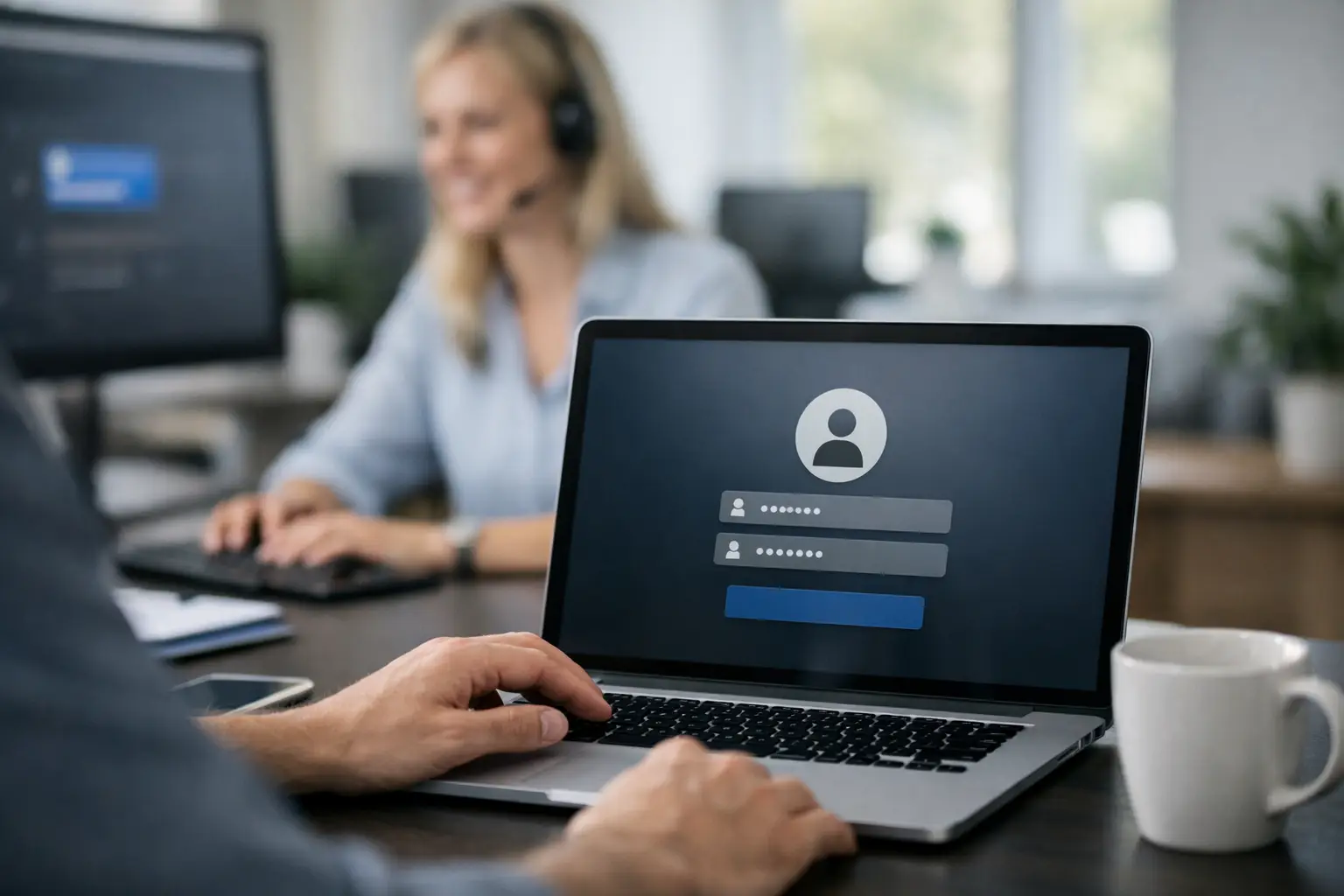
The first screen employees see each day is usually wasted. It flashes a default background, maybe a system message, and then disappears. That is exactly why learning how to use login screens for employee communication matters. You already own the moment. The question is whether you are using it to reinforce priorities, reduce message drift, and reach people before inboxes and chat threads take over.
Login screens work because they sit outside the usual communication clutter. Employees do not need to open an app, search a channel, or remember where an announcement was posted. The message is simply there, at the point of entry, on a screen they are already looking at. For internal communications leaders, HR teams, operations managers, and IT admins, that makes login screens less of a design feature and more of a control point.
Why login screens are worth using
Most internal communication channels compete for attention. Email piles up. Chat gets noisy. Intranet posts depend on voluntary visits. Login screens are different because they are part of the employee workflow. They create repeated exposure without asking employees to change behavior.
That repeated exposure is what makes them useful for everyday organizational alignment. A single message on a login screen can support a shift change reminder, a quarterly goal update, a site-specific safety notice, or a company picnic announcement. It can also reinforce recognition and culture in a way that feels present rather than buried.
There is a trade-off, though. Login screens are not the place for long policy explanations or complex training content. They are best for short, high-visibility communication that benefits from repetition. Think awareness first, then action.
How to use login screens for employee communication effectively
The best login screen strategy starts with message discipline. If every announcement gets pushed to every employee, the channel loses value fast. Use login screens for content that is timely, brief, and meaningful enough to deserve front-door visibility.
A good starting point is to separate messages into three practical groups. The first is operational communication, such as maintenance windows, schedule changes, sales milestones, or benefit deadlines. The second is cultural communication, including employee recognition, anniversaries, and event promotion. The third is performance communication, such as KPI snapshots, team goals, and progress against targets.
This mix matters. If your login screens only carry corporate notices, employees begin to tune them out. If they only show celebratory content, they may feel disconnected from business priorities. The strongest programs balance both – unite people around what matters now while also reinforcing why the work matters.
Keep each message short enough to absorb at a glance
Login screens are a glance medium. Employees are signing in, getting ready for a task, or moving quickly between sessions. That means a wall of text will fail, even if the content is important.
Aim for one idea per screen. Use a short headline, a supporting line, and one clear takeaway. A message like “Open Enrollment Ends Friday” is stronger than a paragraph about benefits timelines. A screen that says “Dallas Team Hit 98% of Monthly Goal – Great Work” will land faster than a detailed dashboard snapshot.
This is also why visual consistency matters. If every login screen follows a familiar branded layout, employees know where to look and what to expect. That reduces friction and speeds up comprehension.
Segment by audience, not just by company
One common mistake is using login screens as a broadcast-only channel. Company-wide messaging has its place, but relevance drives attention. The more closely a message matches a team, location, or function, the more likely it is to be noticed and remembered.
A warehouse team may need a safety update and shift notice. A sales group may need a push on quarter-end targets. Corporate staff may need office event reminders or policy deadlines. Sending all three messages to everyone creates noise. Targeting them makes the channel useful.
This is where centralized governance becomes important. You want local relevance without losing brand consistency or message control. A system that lets communicators and managers publish segmented content from one control panel solves that problem cleanly.
Build a simple workflow people will actually use
If creating login screen content takes too much time, the channel will go stale. That is why workflow matters as much as screen placement. The easier it is for non-designers to create and publish content, the more likely the program will stay active.
For most organizations, the practical model is simple: create, approve, publish. Internal communications or HR can own core templates and company-wide campaigns. Team leaders or local managers can submit or manage approved local content. IT can control deployment and device policy without becoming the bottleneck for every update.
Using familiar creation tools helps. When communicators can build slides in PowerPoint instead of learning a complex design platform, turnaround gets faster and formatting stays consistent. That is a major advantage in environments where speed matters and not every content owner is a designer.
Match timing to employee behavior
A login screen message is only effective if it appears at the right moment. Some content works best first thing in the morning, such as urgent notices, meeting reminders, or company-wide updates. Other messages benefit from running over several days, especially if they support an event, a deadline, or a recognition campaign.
Think in terms of campaign windows rather than one-off postings. A benefits reminder might run for two weeks. A Friday culture message might rotate weekly. A KPI update might refresh every Monday. This creates a rhythm employees can recognize.
It also prevents a common problem: stale messages that stay visible long after they stop being relevant. Once that happens, trust in the channel drops.
Measure whether login screens are doing their job
If login screens are part of your communication system, they should be measurable. Otherwise, you are relying on guesswork.
At minimum, track whether screens were delivered, seen, and acknowledged where needed. For general awareness campaigns, view counts and exposure trends may be enough. For urgent or compliance-related communication, read tracking or follow-up actions matter more. The point is accountability. You need to know whether a message reached people, not just whether it was published.
This is especially useful when comparing channels. If a policy notice gets weak email engagement but strong login screen visibility, that tells you something important about where attention actually lives in your organization. It also helps internal communications teams justify investment in channels that produce reach with less effort.
Where login screens fit in your broader channel mix
Login screens are not a replacement for every communication tool. They are a high-visibility layer in a broader system. Use them to create awareness, reinforce priorities, and drive employees toward deeper information when needed.
For example, a login screen can announce a new policy, but the full policy should still live in the proper system of record. A screen can celebrate a team achievement, but managers may still want to discuss the context in team meetings. A KPI headline can create focus, while a dashboard or report handles the detail.
That distinction matters because it keeps the channel effective. Login screens are strong at repetition, visibility, and reach. They are weaker at nuance. Use them for what they do best.
A practical rollout plan for IT and communications
If you are introducing login screens as an employee communication channel, start small and prove value quickly. Begin with one or two message types that are easy to validate, such as event reminders, recognition content, or deadline notices. Then expand into team segmentation and KPI communication once governance is established.
Communications should own standards, templates, and publishing rules. IT should own deployment, permissions, and endpoint reliability. HR and operations can supply the recurring use cases that make the channel useful day to day. That shared model keeps the system controlled without making it slow.
For organizations that want a faster path, a centrally managed platform like ConnectedCompany can simplify the whole process by combining content control, endpoint delivery, targeting, and engagement tracking in one place. That matters when your goal is not just to display messages, but to make sure the right employees actually see them.
The real value of login screens is not novelty. It is consistency. When employees see the right message at the right moment, day after day, alignment stops being a campaign and starts becoming part of how work gets done.