
Introduction
Office communication in 2026 encompasses the seamless exchange of information across in-person, hybrid, and remote setups. This includes verbal discussions in collaborative office hubs, written messages via email and chat, nonverbal cues during video calls, and digital asynchronous updates through unified platforms. With over 80% of organizations now operating in hybrid or remote models, mastering office communication is no longer optional.
This article will address practical strategies, tools, and examples for improving office communication in modern workplaces. We will cover the foundational skills, communication channels, step-by-step improvement tactics, and measurement methods necessary for success. The scope includes verbal, written, and nonverbal communication, emotional intelligence, technology choices, and actionable weekly improvements.
Our target audience includes office professionals, managers, and hybrid or remote teams seeking to enhance their communication effectiveness. Effective communication is crucial in today’s complex and evolving business environment, directly impacting productivity, project delivery, employee retention, and overall business outcomes. Employees with access to effective communication tools are 5.3 times more likely to perform at their best, while poor communication can cost businesses thousands per employee annually.
Effective office communication involves fostering an open, empathetic culture through active listening, regular check-ins, and clear, transparent messaging. By mastering these elements, organizations can boost engagement, reduce costly misunderstandings, and adapt quickly to change.
The foundations of effective office communication
Effective office communication connects directly to day-to-day activities: daily stand-ups for quick updates, weekly sprint meetings to align on priorities, status updates via chat for project handovers, client emails requiring precise tone, and leadership announcements tying tasks to organizational mission.
Types of Office Communication
Workplace communication breaks into four main types:
- Verbal communication: Team meetings and calls, where preparation with agendas helps anticipate stakeholder questions.
- Written communication: Emails and chats, demanding one main point per message with clear subject lines.
- Nonverbal communication: Body language, eye contact, and facial expressions, which convey trust, authenticity, and clarity in both in-person and virtual settings.
- Digital asynchronous communication: Tools like Asana for visible task management across borders and time zones.
Common Scenarios
In a modern workplace, consider these scenarios:
- Weekly Monday sprint meetings for team progress reviews.
- Quarterly performance review sessions requiring careful preparation.
- Project handovers at month-end for knowledge transfer.
Each scenario demands different communication skills and channel choices.
Consequences of Poor Communication
Poor foundations manifest in real consequences:
- Product launches can slip by weeks due to unclear ownership and missing updates.
- Knowledge-sharing sessions, which comprise 49% of employee communication, achieve only 75% effectiveness when unstructured.
- Email dominates at 33% for internal communication and 53% for external use, yet most employees struggle with inbox overload.
Modern offices must also handle multicultural teams and cross-border compliance communication. For example, EU offices require clear GDPR notices targeted to specific roles, ensuring compliance without overwhelming staff with irrelevant messages. This mirrors the principles behind effective internal communication campaigns that tailor messages to distinct audiences and desired outcomes.
Transition: With a solid understanding of the foundations, let’s examine the core communication skills every office professional needs to succeed.
Core communication skills every office professional needs
Active listening, empathy, clarity, conciseness, and awareness of nonverbal cues are critical skills for mutual understanding in office communication. These individual skills are the building blocks of strong internal communication. Without them, even the best communication tools fall flat. Personal development in these areas pays dividends across every interaction with coworkers, clients, and company leaders.
Defining Key Communication Skills
- Active listening: Fully focusing on the speaker, summarizing key points, and asking clarifying questions.
- Empathy: Understanding and acknowledging others’ perspectives and emotions.
- Clarity: Expressing ideas in a straightforward, unambiguous manner.
- Concision: Limiting communication to essential points, avoiding unnecessary detail.
- Awareness of nonverbal cues: Recognizing and appropriately responding to body language, facial expressions, and tone.
Clarity and Concision
- Limit emails to one main point.
- Use subject lines like “Action needed by 25 April: Q2 budget approvals.”
- Structure messages in 3-5 short paragraphs maximum.
Preparation
- Come to meetings with an agenda and relevant data.
- Anticipate stakeholder questions.
- Prepared leaders reduce meeting times by defaulting to 30 minutes with clear recaps.
Tone Control
- Soften direct feedback without sounding passive-aggressive.
- Example: “I appreciate your effort on the draft; let’s align on these revisions by EOD to meet the client timeline.”
Nonverbal Awareness
- Use camera-on defaults for video calls.
- Maintain open posture and eye contact.
- Avoid distractions like checking your phone during meetings.
Active Listening Techniques
- Summarize with phrases like “So what I’m hearing is…”
- Ask clarifying questions.
- Avoid multitasking during calls.
In real office scenarios, these skills shine during sprint meetings, performance reviews, and project handovers. The 72% gap between leader and employee perception on communication timeliness often traces back to weak individual skills rather than tool problems.
Transition: With these skills in mind, let’s explore how nonverbal and written communication play a role in the office.
Nonverbal and written communication in the office
Nonverbal communication carries enormous weight in both in-person and video meetings. Posture, eye contact, and facial expressions all send signals—sometimes louder than words. Nonverbal cues either reinforce your message or undermine it.
The Power of Nonverbal Communication
- Folded arms in a one-on-one meeting can signal defensiveness.
- Checking your phone during a presentation broadcasts disinterest.
- Not turning on your camera during a key client call erodes trust.

Written Communication Best Practices
- Use bullet points in long updates—people scan before they read.
- Limit emails to 3-5 short paragraphs.
- Add clear deadlines (“EOD Friday, 29 May 2026”) rather than vague timelines.
Tips for Written Tone
- Use neutral wording and provide brief context.
- Example: “Here’s why I’m asking—to align on priorities before the stakeholder update.”
Rewriting Vague Messages
- Vague: “Can we talk?”
- Precise: “Can we review the Q3 roadmap for 20 minutes this afternoon? Here’s the link.”
This approach to real-time messaging keeps everyone on the same page and boosts productivity.
Transition: Understanding nonverbal and written cues sets the stage for handling more complex interactions, such as difficult conversations requiring emotional intelligence.
Emotional intelligence and difficult conversations at work
Emotional intelligence is foundational for effective communication. In office settings, this means being aware of your emotions and reading others’ during high-stakes interactions—such as announcing organizational changes, handling a missed deadline, or discussing underperformance.
Applying Emotional Intelligence
- Acknowledge uncertainty before presenting solutions.
- Recognize team pressures before focusing on next steps.
- Focus on growth paths rather than blame to foster psychological safety.
For example, when addressing a missed client deadline, a manager might say: “I know the client push was intense, and the timeline shifted on us. Let’s talk about what we can adjust to prevent this next quarter.” This approach maintains engagement and trust.
Leaders can encourage staff to engage in workplace initiatives and contribute ideas by using interactive communication methods, such as team brainstorming sessions or incorporating social media elements or targeted on-screen team communication platforms to boost participation.
Empathy in Office Communication
- Query how new policies affect different departments.
- Ask questions company-wide before announcements.
- Culturally connected employees are 3.7 times more engaged—empathetic communication builds that connection.
Planning Difficult Discussions
- Choose a private setting.
- Prepare evidence-based points.
- Leave time for questions.
Transition: With emotional intelligence as a foundation, selecting the right communication channels and tools becomes essential for effective message delivery.
Communication channels and tools in modern offices
Communication channels are the various mediums through which information is exchanged in the workplace. These include in-person conversations, phone calls, email, instant messaging, video conferencing, and project management platforms. Use diverse communication channels to adapt messages to appropriate mediums such as instant messaging for quick queries, video calls for remote employees, or face-to-face meetings for complex discussions.
Choosing the right tools and knowing when to use each channel separates effective teams from scattered ones, especially when you need high-priority toast notifications to break through routine digital noise.
Comparing Communication Tools
|
Tool Type |
Best For |
Key Features |
Example Tools |
|---|---|---|---|
|
|
Formal decisions, approvals, summaries |
Subject lines, searchable records, attachments |
Outlook, Gmail |
|
Chat/Instant Messaging |
Quick questions, status pings, brainstorming |
Real-time messaging, channels, integrations |
Slack, Microsoft Teams, Google Chat |
|
Video Conferencing |
Hybrid meetings, onboarding, workshops |
Screen sharing, recording, breakout rooms |
Zoom, Google Meet, Teams |
|
Project Management |
Task tracking, deadlines, responsibilities |
Task lists, automation, integrations |
Asana, Trello, Jira, ProofHub |
Guidelines for Channel Selection
- Use email for formal decisions and approvals.
- Use chat tools for quick questions and informal brainstorming.
- Use video conferencing for hybrid meetings and workshops.
- Use project management tools for tracking tasks and responsibilities.
Match the channel to message sensitivity. Performance feedback, HR issues, and salary discussions should never happen via public Slack channels. Use private video calls or in-person one-on-one meetings for sensitive topics.
For very small teams, consolidating internal communication tools matters more than feature richness. Choose collaboration tools and supportive visuals like custom wallpapers and lock screen images that your team will actually use consistently.
Transition: With the right channels and tools in place, the next step is to build a comprehensive office-wide communication strategy.
Building an office-wide communication strategy
A documented office communication strategy aligns your leadership team, managers, and individual contributors around how information flows. Without this, you rely on informal habits that vary wildly across teams—leading to perception gaps where 72% of leaders think communication is timely while only 48% of employees agree.
Steps to Build Your Strategy
- Start with clear goals: Define what success looks like (e.g., reduce project delays by 20% by December 2026).
- Identify your audiences: Tailor messages for executives, managers, and individual contributors.
- Conduct a communication audit: Review existing channels and survey employees for gaps and overloads.
- Create a 6-12 month communication calendar: Schedule recurring events for predictable internal comms.
- Establish consistency in voice and brand: Use common templates and style guides.
- Document your internal communication platform choices: Specify which tool serves which purpose.
Transition: With your strategy in place, here are step-by-step weekly improvements you can implement immediately to boost office communication.
Step-by-Step Weekly Communication Improvements
Improvements can start with small, concrete actions within 5-7 days. You don’t need a massive strategy overhaul to see results. Micro-changes compound into significant gains when applied consistently.
Monday:
- Revise one email template you use frequently.
- Add a clear subject line format, bullet points for key information, and an explicit deadline.
- Test it with your next three sends.
Tuesday:
- Audit your meeting invites.
- Add agendas to all meetings scheduled for the coming week.
- Even a simple “Topics: X, Y, Z | Decisions needed: A, B” improves focus.
Wednesday:
- Limit one recurring meeting to 30 minutes by default.
- Most meetings expand to fill their allocated time.
- Shorter defaults force prioritization.
Thursday:
- End one meeting with a 2-minute recap: who owns what action by when.
- Share this in writing via chat or email immediately after.
Friday:
- Schedule your first feedback-focused one-on-one meetings if you don’t already have them.
- Even 20 minutes bi-weekly with each direct report builds good communication habits.
Example Slack Message Requesting a Deliverable:
Quick update: Q3 roadmap draft ready [link]. Need your input on priorities by EOD—@team?
Example Status Update Email:
Subject: Status Update—Project Alpha
Key progress: Milestone 1 complete as of Tuesday.
Next steps: Design review scheduled for Thursday at 2 PM.
Actions needed: Review attached brief by Wednesday; send questions to me directly.
Measuring Impact:
- Count clarification emails before and after changes.
- Track on-time completion rates for tasks with clear deadlines versus vague ones.
- Run a 3-question poll asking the team if communication clarity improved.
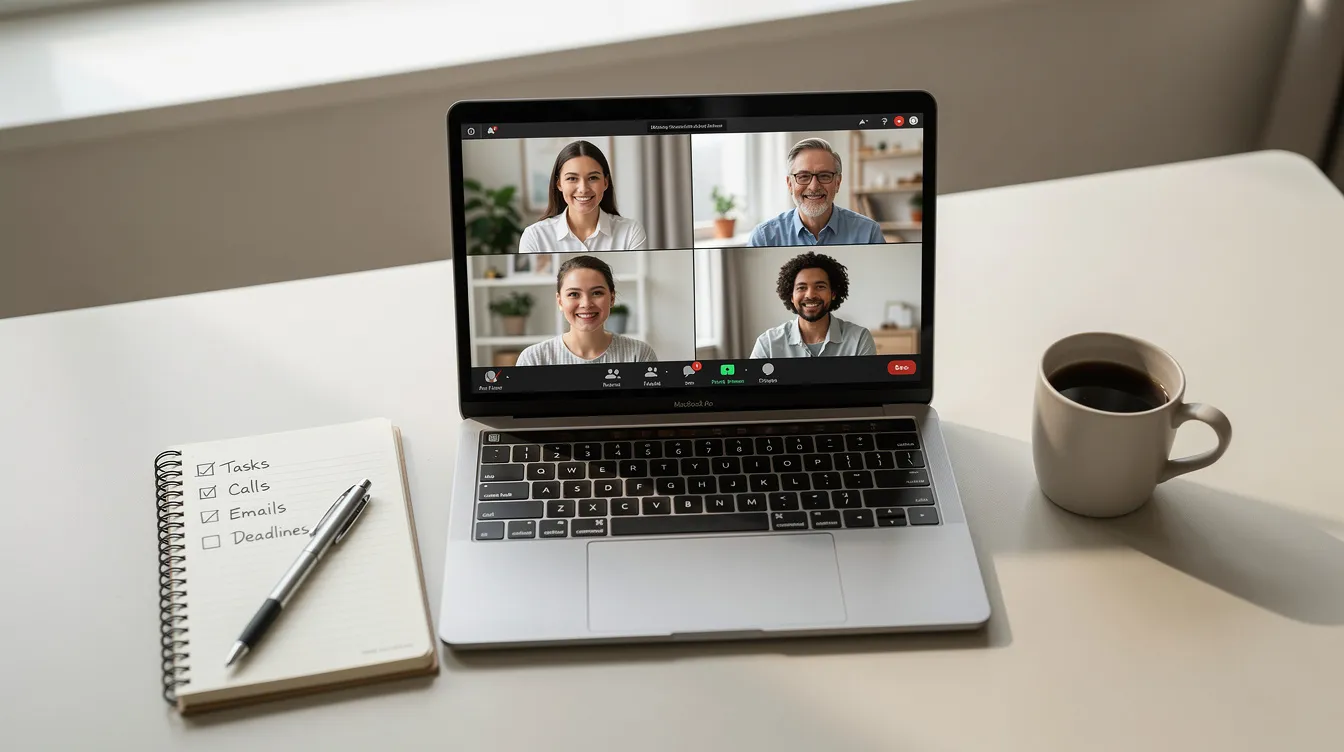
The best communication platforms and processes mean nothing without consistent execution. Pick two changes from this list, implement them this week, and observe the results before adding more.
Transition: After implementing these improvements, it’s essential to measure their effectiveness to ensure ongoing progress.
Measuring communication effectiveness in the workplace
Measuring the effectiveness of workplace communication is essential for any successful business aiming to boost productivity, foster employee engagement, and maintain a positive work environment. With the rise of hybrid and remote working, it’s more important than ever to ensure your internal communication strategies and tools are delivering clear, actionable messages to your entire team.
Methods for Measuring Communication
- Track usage and engagement: Use analytics from Slack, Microsoft Teams, and Google Workspace to monitor message volume, response rates, and engagement.
- Leverage surveys and feedback loops: Conduct regular pulse surveys and feedback sessions to gather direct insight.
- Analyze meeting effectiveness: Review attendance and participation data from video conferencing tools.
- Monitor workflow and task management outcomes: Use project management tools to track task completion and communication-related bottlenecks.
- Assess nonverbal and emotional intelligence factors: Incorporate peer feedback on active listening, body language, and tone during reviews.
- Tie measurement to business outcomes: Connect communication effectiveness to metrics like engagement scores, productivity, and customer satisfaction.
Transition: With measurement in place, let’s explore how to encourage two-way communication and feedback for continuous improvement.
Encouraging two-way communication and feedback
Two-way communication beats top-down broadcasting in modern offices, especially in hybrid teams where company leaders risk losing touch with frontline realities. When information only flows downward, problems fester, ideas go unheard, and employee engagement drops.

Building Two-Way Communication Habits
- Regular one-on-one meetings between managers and team members.
- Open Q&A segments during all-hands meetings.
- Anonymous pulse surveys for honest feedback.
- Passive channels like screensaver-based internal communication to reinforce key messages.
Example Practice:
A monthly “Ask Me Anything” session with the CEO, where employees submit questions via an intranet form or employee app, and the CEO addresses the top questions live.
Responding to Feedback
- Publish a “You said, we did” summary on the intranet every quarter.
- Show employees that their input led to specific changes.
Fostering Psychological Safety
- Thank people for speaking up, even when they disagree.
- Acknowledge concerns publicly to encourage more feedback.
Transition: These feedback loops are especially important in hybrid and remote teams, where communication challenges are amplified.
Office communication in hybrid and remote teams
Typical hybrid arrangements in 2026 involve 2-3 office days per week, with distributed teams spanning different cities and time zones. Physical offices now serve primarily as social and collaborative hubs for workshops, team days, and informal encounters rather than individual work. This shift fundamentally changes how team collaboration happens.
Challenges in Hybrid Setups
- Fewer hallway conversations mean fewer spontaneous information exchanges.
- Dependence on written communication increases misunderstanding risk.
- Decisions made in meeting rooms can exclude remote colleagues.
Effective Communication Strategies for Hybrid Teams
- Document decisions in writing within 24 hours of any meeting.
- Default to video with cameras on for key discussions.
- Rotate meeting times across time zones monthly.
- Share agendas 24 hours before meetings for async contributions.
Example Practice:
A product team with members in Berlin, Toronto, and Singapore coordinates weekly via Zoom with shared slides and recordings, and daily via a Slack stand-up channel. Shared digital whiteboards (e.g., Miro) enable workshop participation regardless of location.
Inclusive Practices
- Always share slides and recordings after meetings.
- Call on remote participants first during discussions.
- Use file sharing tools that work across all locations.
- Design workshop activities for both in-room and remote attendees.
The goal is async communication as a default, with synchronous sessions reserved for high-value collaboration.
Transition: By mastering hybrid communication, organizations can ensure all team members feel included and informed, setting the stage for sustained success.
Conclusion: sustaining strong office communication
Strong business communication combines personal skills, smart channel choices, structured strategies, emotional intelligence, and inclusive practices. No single tool or policy creates lasting improvement—it’s the combination of intentional habits applied consistently across your organization.
Effective office communication involves fostering an open, empathetic culture through active listening, regular check-ins, and clear, transparent messaging. Communication is an ongoing discipline, not a one-time initiative. Revisit your communication strategies quarterly. Audit channels annually. As your teams grow, tools evolve, and work patterns shift, your approach must adapt. Critical thinking about what’s working and what isn’t keeps your systems aligned with reality.
Pick 2-3 specific improvements from this article and commit to testing them over the next 90 days. Maybe that’s clearer subject lines in every email, feedback-focused one-on-one meetings with each direct report, or a new communication calendar for your team. Start small, measure results, and build from there.
Strong office communication prepares your teams for future changes in technology and work patterns. Whether AI-orchestrated tools transform how we collaborate or new hybrid models emerge, organizations with clear communication foundations adapt faster. The investment you make in these skills and systems today pays dividends long into your organization’s future.