
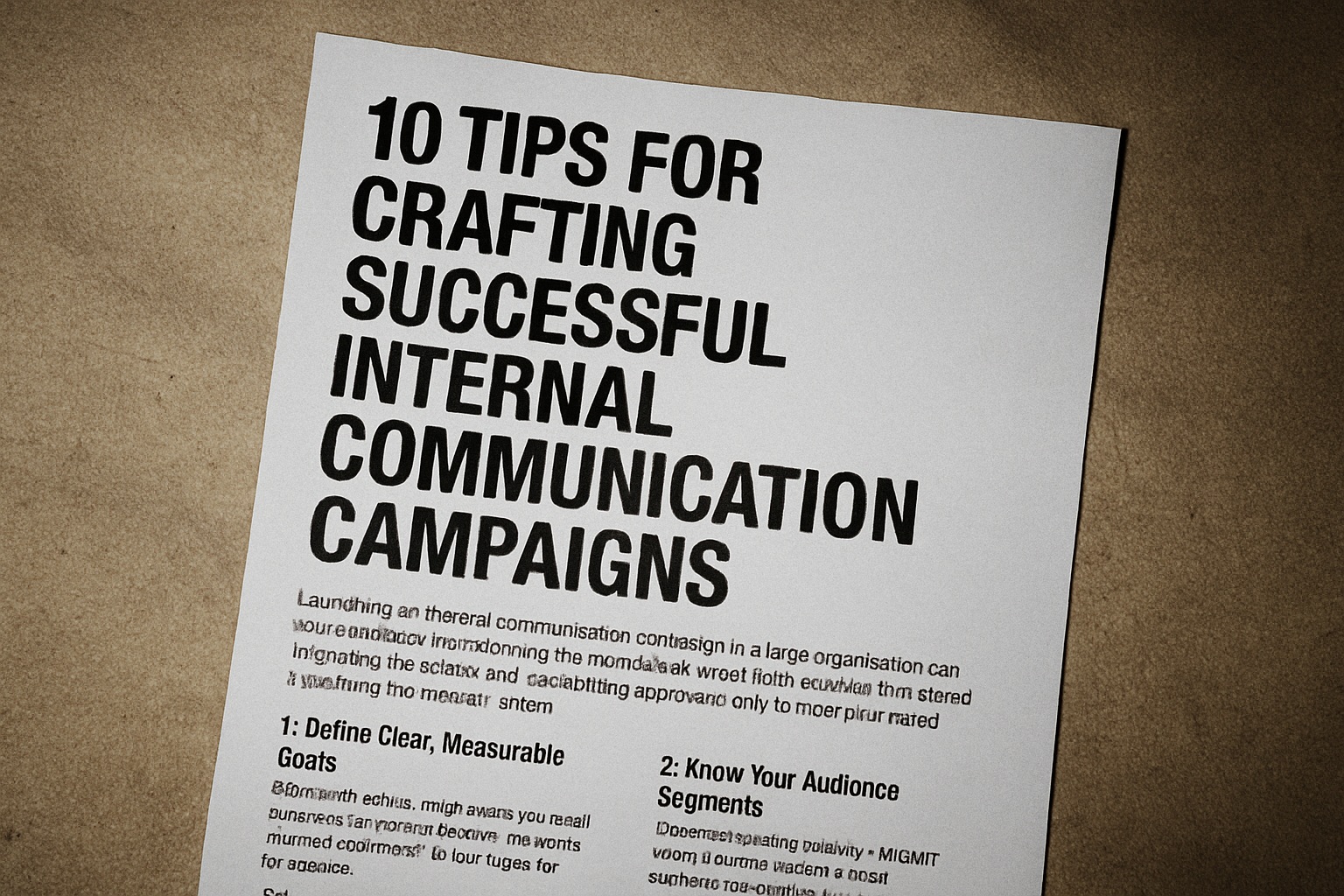
An internal communications plan provides a clear roadmap for consistent and efficient communication with employees. Launching an internal communication campaign in a large organization can sometimes feel like shouting into a void. In the broader field of internal comms, you spend weeks crafting the perfect message, designing assets, and coordinating approvals, only to have your email open rates hover in the single digits. This guide is for internal communications professionals, HR leaders, and managers looking to improve their internal campaigns. Effective internal communications are essential for employee engagement and organizational success. If you’re wondering how to plan a successful internal communications campaign, you’re in the right place.
In a corporate environment saturated with information, simply hitting “send” is not enough. To truly engage your workforce and drive behavior change, you need a strategic approach that cuts through the noise. Effective internal messaging, as part of a well-defined internal communication strategy, is crucial for aligning your campaign with organizational goals and ensuring your message resonates.
Here are 10 actionable tips for crafting internal communication campaigns that actually get seen, understood, and acted upon. Remember, a strong internal communication strategy is essential for campaign success.
Introduction to Internal Communication
Internal communication is the foundation of a thriving organization. It connects employees at every level, ensuring that messages flow smoothly between departments, teams, and leadership. A strong internal communications campaign does more than just share company news—it motivates employees, fosters engagement, and aligns everyone with the organization’s goals.
When internal communications are strategic and well-planned, they create a sense of belonging and purpose. Employees feel informed, valued, and empowered to contribute to the company’s success. Whether you’re launching a new initiative or reinforcing core values, a successful internal communications strategy ensures your messages are clear, consistent, and impactful.
By investing in effective internal communication, organizations can boost employee engagement, drive better business outcomes, and build a culture where everyone feels connected and motivated to succeed.
Transitioning from understanding the importance of internal communication, let’s dive into the first step: setting clear, measurable goals for your campaign.
Tip 1: Define Clear, Measurable Goals
Before you write a single word, you need to know exactly what you want to achieve. “Raising awareness” is too vague. Be specific. Setting SMART objectives for your campaign ensures your goals are Specific, Measurable, Achievable, Relevant, and Time-bound, making it easier to track progress and demonstrate impact. When defining the purpose of your campaign, make sure it aligns with your organizational goals to support broader company initiatives and drive meaningful results. Do you want 80% of employees to complete a survey? Do you need to reduce IT support tickets by 20% during a system migration? Setting concrete goals allows you to measure success and adjust your strategy in real-time. If your goal is action-oriented (e.g., signing up for a program), track conversions and ensure your communication goals are aligned with business goals and company goals. If it’s knowledge-based, use quick polls to test understanding.
With clear objectives in place, the next step is to understand who you’re communicating with and how to tailor your message for maximum impact.
Tip 2: Know Your Audience Segments
Analyze the target audience to tailor messages effectively considering preferences and locations. Utilize segmentation by role, geography, and work environment to address diverse employee needs. Tailoring messages to different audience segments helps ensure that communication is relevant and effective.
A blanket message sent to “All Staff” rarely resonates with everyone. The needs of a sales team on the road are vastly different from those of developers in the office or frontline workers on a factory floor. Segment your audience and tailor your message accordingly. Identifying the right audience for each message ensures that communications are relevant and effective, improving engagement and productivity.
- For Leadership: Focus on strategic impact and ROI.
- For Managers: Focus on talking points and how to support their teams.
- For Employees: Focus on “What’s in it for me?” (WIIFM). By personalizing the angle, you make the campaign relevant, which increases engagement.
- For New Hires/New Employees: Use onboarding communications to help new team members integrate smoothly, understand company culture, and feel engaged from day one.
- For Brand Ambassadors: Empower employees who actively promote and represent your company to help amplify your message and strengthen internal engagement.
Now that you know your audience, let’s explore how visuals can help your message stand out.
Tip 3: Leverage the Power of Visuals
We process images 60,000 times faster than text. In a busy workday, employees are far more likely to notice a compelling graphic than a dense block of text. Incorporating interactive elements into visuals—such as clickable graphics or prompts for employee feedback—can further boost engagement and participation. This is where tools like Connected Company, a cloud-based team communication platform shine. Instead of burying your campaign visuals in an email attachment, push them directly to where employees are looking:
- Screensavers: Create a digital billboard campaign that plays whenever a computer is idle, using creative screensaver ideas for internal communication.
- Backgrounds: Deploy a branded desktop background that keeps the campaign theme top-of-mind every time they minimize a window, leveraging custom wallpapers and lock screen images to reinforce your campaign.
Visual consistency across these touchpoints creates a professional, cohesive feel that signals importance.
The internal communications team plays a key role in designing and deploying these visual and interactive assets to maximize employee engagement.
With your visuals ready, it’s time to select the best channels to deliver your message.
Tip 4: Choose the Right Channel Mix
Don’t rely on a single channel. Successful campaigns use a multi-channel approach to ensure coverage. Selecting the right channels for your employee communications is crucial—choose methods like email, social media, intranet, or videos based on your audience and campaign goals to maximize engagement and effectiveness.
- Email: Best for detailed information and official records.
- Chat (Slack/Teams): Best for quick reminders and Q&A.
- Intranet: Best for hosting long-form resources and FAQs, and serves as a central hub for employee communications.
- Connected Company (Screensavers/Lock Screens): Best for high-visibility awareness and driving traffic to other channels by using custom corporate screensavers for branding and communication. For example, use a screensaver to tease a new initiative and include a “Read more on the Intranet” call to action. This drives traffic from a passive channel to an active one.
Utilizing a mix of communication channels can help reach diverse employee audiences effectively.
With your channel mix established, let’s look at how technology can further enhance your internal communications strategy.
Leveraging Technology for Internal Communication
Benefits of Technology
In today’s digital workplace, technology is a game-changer for internal communicators. Modern tools make it easier than ever to reach employees wherever they are—whether they’re in the office, working remotely, or on the frontline. By leveraging technology, organizations can streamline communication, reduce information overload, and keep employees engaged while staying ahead of emerging corporate communication trends.
Examples of Digital Tools
Platforms like company intranets, internal communication apps, and digital signage solutions enable two way communication and real-time feedback. These accessible resources ensure that important updates, announcements, and resources are always within reach. For example:
- Push notifications and screensavers: Deliver critical information instantly.
- Chat platforms: Foster ongoing dialogue and collaboration.
- Digital signage: Share updates in common areas or remote locations.
Personalizing Communication
By embracing the right technology, internal communicators can connect directly with different groups, personalize messages, and ensure that every employee feels informed and included. Ultimately, leveraging technology helps organizations communicate more effectively, boost engagement, and achieve greater success.
With technology as your ally, let’s focus on crafting concise, scannable messages that capture attention.
Tip 5: Keep It Concise and Scannable
Attention spans are short. If your message takes more than 30 seconds to read, you’ve lost half your audience. Reinforcing your core messages throughout the campaign is essential to ensure understanding and engagement.
- Use Bullet Points: Break up text to make it easy to skim.
- Bold Key Information: Highlight dates, deadlines, and actions.
- Get to the Point: Put the most critical information in the first sentence. Review every piece of content and ask: “Can I say this in fewer words?” Make sure the same message is delivered consistently across all formats, whether it’s a summary, template, or detailed update.
When your message is clear and concise, you’re ready to ensure urgent communications get the attention they deserve.
Tip 6: Use “Hero Notifications” for Urgent Calls to Action
Sometimes, a polite nudge isn’t enough. If you have a deadline approaching or a critical compliance requirement, you need a channel that demands attention. Hero Notifications from Connected Company allow you to send full-screen, unmissable alerts, similar to Toast Notifications that capture attention for critical messages. These notifications are essential for effective communication, ensuring that urgent updates—including sensitive topics—are delivered clearly and cannot be overlooked. Use these sparingly for maximum impact.
- Example: “Only 2 Days Left for Open Enrollment! Click here to finalize your benefits.” This ensures that the stragglers who ignored the first three emails finally take action.
After ensuring urgent messages are seen, it’s important to plan your campaign timeline for sustained engagement.
Tip 7: Create an Internal Communications Campaign Timeline (The “Drip” Method)
Start by using a communications calendar to plan and schedule each phase of your campaign for maximum impact and alignment with organizational milestones.
Don’t dump all the information at once. Structure your campaign like a marketing launch, using these steps:
- Tease Phase: Build anticipation (“Something new is coming…”) using mysterious lock screen images.
- Launch Phase: The big announcement across all channels.
- Sustain Phase: Share success stories, user tips, and progress updates.
- Close Phase: Final reminders and “last chance” alerts.
A drip campaign keeps the momentum going without overwhelming employees on day one. Maintain a consistent cadence to ensure your messages stay on people’s radars and support ongoing engagement.
Be careful not to overwhelm employees, but make sure there are enough communications to reinforce your message—too few and it may be missed, too many and people tune out.
Finally, provide a clear roadmap so employees know what to expect and how to engage throughout the campaign.
As you manage your campaign timeline, remember that change management is often a key driver for internal communications.
Change Management and Communication
The Role of Communication in Change
Navigating change is one of the biggest challenges organizations face, and effective internal communications are essential for a smooth transition. Whether you’re rolling out a new process, restructuring teams, or launching a new initiative, clear and timely communication can make all the difference.
Strategies for Change Management
A successful internal communications strategy for change management starts with transparent leadership messages that explain the “why” behind the change. Providing accessible resources—like FAQs, guides, and support contacts—helps employees understand what’s happening and what’s expected of them. Regular updates and open channels for questions ensure that employees feel supported and engaged throughout the process.
By communicating change effectively, organizations can build trust, reduce uncertainty, and encourage buy-in from employees. This not only minimizes disruption but also increases employee engagement, helping the organization adapt and thrive in times of change.
Empowering your managers is the next step to ensure your message is delivered effectively throughout the organization.
Tip 8: Empower Your Managers
Managers are your most powerful communication channel. Employees trust their direct supervisors more than corporate headquarters. Senior leaders play a crucial role by supporting and aligning with managers, ensuring that key messages are consistent and approved at the highest level. Equip managers with a “Campaign Toolkit” before the launch. Include:
- Talking points for team meetings.
- FAQs to answer common questions.
- Slide decks or one-pagers.
When managers are aligned and confident, they become champions of your message.
Communication leaders can further support this process by providing guidance and resources to help managers communicate effectively, overcoming challenges like information overload and inconsistent messaging.
With managers empowered, it’s vital to keep communication two-way by incorporating feedback loops.
Tip 9: Incorporate Feedback Loops
Communication should be a two-way street. Don’t just talk at your employees; listen to them. Include a mechanism for feedback in your campaign. This could be:
- A dedicated Slack channel for questions
- A simple “suggestion box” email address
- A quick pulse survey
If employees feel heard, they are more likely to buy into the initiative. Plus, their feedback can help you tweak the campaign mid-flight if something isn’t landing correctly. Analyzing this feedback allows you to identify trends in engagement and preferences, which can be used to improve the overall employee experience.
After gathering feedback, recognizing and appreciating employees helps reinforce positive engagement and outcomes.
Recognizing and Appreciating Employees
The Importance of Recognition
Recognition is a powerful driver of employee engagement and a cornerstone of a positive company culture. When employees feel appreciated, they’re more motivated, productive, and committed to the organization’s success. That’s why internal communicators should make recognition a regular part of their communication channels.
Methods of Employee Recognition
Employee appreciation campaigns can take many forms, including:
- Spotlighting achievements in newsletters
- Celebrating milestones on digital signage
- Sending personalized thank-you messages
- Intranet shout-outs
- Team chat highlights
By identifying trends and tailoring recognition to different audience segments, organizations can ensure that every employee feels seen and valued.
Impact of Consistent Recognition
Using a mix of communication channels—like screensavers, intranet shout-outs, or team chat highlights—helps reach employees across departments and locations. Consistent recognition not only boosts morale but also strengthens the work environment, making employees more likely to engage and contribute to the company’s goals.
By weaving recognition into your internal communications plan, you create a culture where success is celebrated, and employees are inspired to do their best work.
With recognition in place, it’s time to measure your campaign’s effectiveness and optimize for future success.
Tip 10: Measure, Analyze, and Optimize
Return to the goals you set in Tip #1. Did you meet them? Analyze the data from all your tools: An effective strategy involves ongoing measurement and optimization to ensure your internal communications are always improving.
- Email open rates and click-throughs: Using templates and streamlined processes can save time and make it easier to track these metrics.
- Intranet page views
- Connected Company engagement metrics
- Survey results
Identify what worked and what didn’t. Did the screensaver drive more traffic than the newsletter? Did the Hero Notification spike compliance? Use these insights to refine your playbook for the next campaign. The best internal communication campaigns are those that continually evolve based on data and feedback, ensuring your approach remains strategic and impactful. An effective internal communications strategy is essential for long-term success and ongoing employee engagement.
With your campaign measured and optimized, you’re ready to elevate your next employee engagement initiative.
Elevate Your Next Employee Engagement Campaign
Effective internal communication is part art, part science. By combining strategic planning with the right tools, you can transform how your organization shares information. Moving beyond standard emails to utilize the visual real estate of screensavers and lock screens ensures your message is not just sent, but truly seen.
Ready to give your next campaign the visibility it deserves? Explore how Connected Company can help you engage your workforce and drive results like never before.
Internal Communications Campaign Summary Checklist
Use this checklist to ensure your internal communications campaign is set up for success:
- Set SMART Objectives
- Define clear objectives using SMART criteria: Specific, Measurable, Achievable, Relevant, Time-bound.
- Align Campaigns with Business Goals
- Ensure your internal communications campaigns support and align with broader organizational objectives.
- Use a Multi-Channel Approach
- Select a mix of communication channels (email, intranet, digital tools, in-person interactions) to reach all employees.
- Analyze and Segment the Audience
- Analyze your target audience and utilize segmentation by role, geography, and work environment to tailor messages effectively.
- Measure Both Quantitative and Qualitative Metrics
- Track open rates, click-through rates, engagement levels, and gather qualitative feedback for comprehensive evaluation.
- Invite Two-Way Feedback
- Implement feedback mechanisms such as pulse surveys, live Q&A sessions, and suggestion boxes to encourage employee participation.
- Evolve the Strategy Over Time
- Regularly analyze engagement data and adjust your internal communications strategy to meet changing organizational needs.
By following this checklist, you’ll be well-equipped to plan, execute, and optimize a successful internal communications campaign that drives engagement and supports your organization’s goals.