
In 2026, employment communication is more than just an HR function—it’s a competitive advantage for organizations. Employment communication encompasses every exchange of information and feedback across the entire employee lifecycle, from the moment a candidate first encounters your job posting to the day they transition to alumni status. This guide is designed for HR professionals, managers, and business leaders seeking to improve workplace communication.
Effective employment communication is essential for organizational success, employee engagement, and retention. Employee communication refers to the exchange of information, ideas, feelings, and feedback between employees and management within an organization. Employment communication encompasses all forms of employee communication throughout the employee lifecycle.
Organizations use a variety of communication methods—including digital platforms, in-person meetings, and mobile messaging—to ensure they reach all employees, regardless of their role or location. This includes top-down directives from leadership, bottom-up feedback flowing from employees to managers, and peer-to-peer dialogue that fuels collaboration. With 56% of U.S. employees working remotely at some point since 2020 and hybrid models now standard, the stakes for getting this right have never been higher. Employee communication is important because it directly impacts morale, engagement, productivity, satisfaction, and retention, making it critical for achieving business objectives.
The payoff is measurable. Organizations with robust employee communication see 23% higher profitability, 50% lower voluntary turnover, and engagement scores 4.5 times higher than competitors. Engaged workforces are a direct result of effective employment communication. This article walks you through definitions, types, channels, strategy frameworks, and practical tips backed by data from 2020–2026.
In remote and hybrid models, collaboration tools play a key role in enabling seamless communication and information sharing across distributed teams.
Introduction: What “employment communication” means in 2026
Employee communication refers to the exchange of information, ideas, feelings, and feedback between employees and management within an organization. Employment communication is the flow of information, instructions, and feedback that touches every stage of the employment relationship. It starts when a candidate first sees your employer brand and continues through recruiting, onboarding, daily operations, professional development, and eventual offboarding. Employment communication encompasses all forms of employee communication throughout the employee lifecycle.
This communication moves in three directions:
- Top-down: Leadership and HR sharing strategy, policies, and expectations
- Bottom-up: Employees providing feedback, raising concerns, and sharing ideas
- Lateral: Peer-to-peer and cross-functional exchanges that drive collaboration
In 2026, several forces make effective employee communication more critical than ever:
The connection between workplace communication and business success is direct. When internal communication refers to clear, consistent exchanges, you see reduced safety incidents, faster time-to-productivity, and a stronger employer brand that helps you attract top talent.
|
Factor |
Impact |
|---|---|
|
Remote and hybrid work |
Teams spread across time zones need asynchronous, documented communication |
|
Global workforce |
Multilingual support and cultural sensitivity are baseline requirements |
|
Multi-generational teams |
Gen Z, Millennials, Gen X, and Boomers have different communication styles |
|
Tight labor markets |
Retention depends on employees feel valued and informed |
The connection between workplace communication and business success is direct. When internal communication refers to clear, consistent exchanges, you see reduced safety incidents, faster time-to-productivity, and a stronger employer brand that helps you attract top talent.
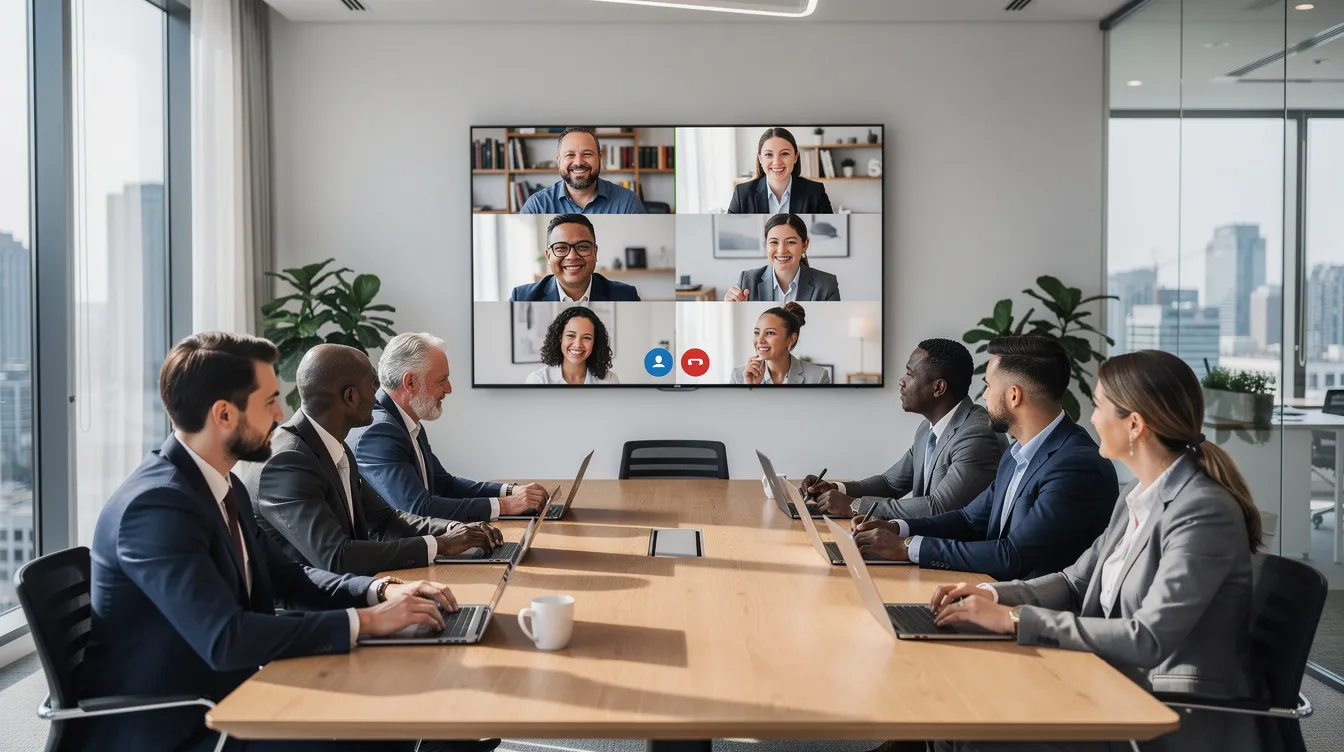
In remote and hybrid models, collaboration tools play a key role in enabling seamless communication and information sharing across distributed teams.
With a clear understanding of what employment communication means, let’s examine why it matters across the employee lifecycle.
Why employment communication matters across the employee lifecycle
Communication needs shift dramatically at each employment stage. What works for onboarding fails during restructuring. What engages new hires frustrates veterans.
The Cost of Poor Communication
The cost of getting this wrong is staggering. Research estimates that poor communication drains over $1 trillion annually from U.S. businesses—including $37 billion in productivity losses and $1.2 billion in stress-related healthcare costs. To avoid these losses and boost engagement, organizations must continually improve employee communication strategies by identifying poor habits and implementing tailored solutions.
Benefits at Each Stage
Here’s what strong employee communication strategy delivers at each stage:
Recruiting and hiring process: Clear job expectations and realistic previews cut early mismatches by 40%. Transparent interview process timelines accelerate time-to-hire by 20-30%. Using multiple channels to reach employees and candidates—such as SMS, intranets, and mobile apps—ensures important information is delivered wherever they are, especially for remote or frontline roles.
Onboarding: A structured plan communicated before Day 1 reduces early attrition by 22%. New hires reach full productivity in 90 days versus 6 months when they receive clear communication from the start.
Ongoing employment: Regular feedback loops increase output by 14.9%. Employees working in high-trust environments show 27% higher innovation rates.
Offboarding: Respectful, well-communicated exits preserve your employer brand and maintain alumni networks that generate 15% of future rehires.
Psychological Safety and Trust
Beyond efficiency metrics, clear communication creates psychological safety. When employees understand decisions and feel heard, trust in organizational leadership increases 2.5 times. Access to timely and accurate information empowers both employees and management to make informed decisions that benefit the organization. This directly affects employee morale and reduces the rumor-mill toxicity that derails teams.
When restructuring communications are opaque, distrust doubles. When they’re empathetic and transparent, backlash drops by 40%.
With an understanding of why employment communication matters, let’s move on to the core principles that make it effective.
Core principles of effective employment communication
The classic “7 C’s” of communication adapt powerfully to employment contexts. Master these, and your messages land:
Clear: Eliminate jargon. A job offer stating “base salary $85,000 plus 15% bonus tied to Q4 targets” beats “competitive compensation package.”
Concise: Cap routine emails at 150 words. Shorter messages see 40% higher open rates.
Complete: Answer who, what, when, why, and how. Incomplete policy updates cause 25% of employee confusion.
Correct: Verify facts. Legal review catches errors that erode trust fast.
Courteous: Use empathetic phrasing. “We appreciate your flexibility during this transition” lands better than “Changes effective immediately.”
Concrete: Ground abstractions in specifics. Performance reviews citing “Q2 sales up 18% due to your client outreach” outperform vague praise.
Consistent: Bi-weekly update cadences build reliability. Employees learn when and where to expect information.
In 2026, two additional principles are non-negotiable:
Transparency: Sharing the “why” behind decisions. According to the 2025 Edelman Trust Barometer, opaque restructuring communications doubled employee distrust, while transparent explanations with clear rationale reduced backlash by 40%.
Empathy: Especially during layoffs or crises. Scripts like “While painful, this move secures our future—here’s the support available” demonstrate emotional intelligence that preserves human relationships even in difficult moments.
Policy update comparison:
|
Ineffective |
Effective |
|---|---|
|
“New policy: come in more.” |
“Effective 1/1/26, hybrid policy requires 3 office days/week for collaboration—exemptions for caregivers via HR form by 12/15.” |
With these principles in mind, let’s explore the different communication styles found in today’s workplace.
Communication styles in the workplace
Communication styles in the workplace are the unique ways individuals share information, express ideas, and interact with colleagues and organizational leadership. These styles—ranging from direct to indirect, formal to informal, and assertive to passive—shape how messages are received and understood. In a global workforce, recognizing and adapting to diverse communication styles is essential for effective employee communication and employee engagement.
For example, some employees may prefer concise, data-driven updates, while others value detailed explanations or informal check-ins. Organizational leadership that tailors its communication strategy to accommodate these differences fosters a more inclusive and positive work environment. This flexibility is especially important in hybrid and remote teams, where cultural backgrounds and communication preferences vary widely.
By encouraging open dialogue and training employees to recognize and respect different communication styles, companies can reduce misunderstandings, boost collaboration, and ensure everyone feels heard. Ultimately, a thoughtful approach to communication styles strengthens employee engagement and supports a high-performing, globally connected workforce.
Next, let’s look at the various types of employment communication and how they function within organizations.
Types of employment communication
Employment communication types can be categorized by direction, content, and form. Understanding each helps you design comprehensive coverage.
By direction
Top-down communication flows from business leaders and HR to the workforce. Strategy announcements, policy changes, and company news fall here. When delivered through multiple communication channels, these messages reach 80% effectiveness.
Bottom-up communication captures employee feedback moving upward. Pulse surveys, suggestion boxes, and skip-level meetings surface insights leadership can’t see otherwise. In 2024, sentiment analysis tools detected 25% of burnout risks before they escalated.
Lateral communication connects co-workers across functions. Informal conversations in Slack channels and cross-team projects reduce silos by 30% when facilitated well.
By content
|
Content Type |
Purpose |
Example |
|---|---|---|
|
Recruitment messaging |
Set expectations |
Realistic job previews in career sites |
|
Onboarding instructions |
Accelerate ramp-up |
Week 1 tool training checklists |
|
Compliance and safety |
Protect employees |
Mandatory modules on workplace protocols |
|
Performance feedback |
Drive improvement |
Structured 1:1 reviews |
|
Recognition |
Boost engagement |
Public shoutouts in team meetings |
|
L&D updates |
Signal growth paths |
New certification announcements |
|
Exit communications |
Preserve relationships |
Alumni newsletters |
By form
Verbal communication through meetings and 1:1s achieves 70% information retention with immediate feedback loops.
Non-verbal communication matters in video conferencing and interviews—body language signals inclusivity or dismissiveness.
Written communication in contracts, handbooks, and policy documents creates audit trails and ensures employees receive consistent information.
Visual communication through dashboards and explainer videos increases comprehension by 65%, and custom wallpapers and lock screen images can unobtrusively reinforce key messages and culture cues throughout the workday.
A 2025 global firm used bottom-up pulse surveys to flag 18% burnout in APAC teams. Workload audits followed, and retention lifted 22% within six months.
Now that you know the types of employment communication, let’s examine the channels and tools organizations use to deliver these messages.
Employment communication channels and tools
No single channel reaches everyone effectively. Organizations need an integrated stack of communication tools tailored to different employee needs and contexts, including centralized platforms for targeted, screen-based employee messaging.
Traditional channels
- Face-to-face meetings: Build 90% trust but don’t scale for distributed teams.
- Town halls: Create shared moments but risk 50% ignore rates without follow-up documentation.
- Email: Provides records but drowns in inbox clutter—average office workers receive 121 emails daily.
- Bulletin boards: Reach frontline workers in physical locations but miss remote workers entirely, while screensaver-based internal communication can extend visibility to shared and personal devices without adding inbox clutter.
Modern digital channels
- Company intranet: Usage increased 40% when paired with search AI. Serves as the central hub for policy documents and company news.
- Microsoft Teams and Slack: 300 million+ daily active users across enterprises. Ideal for real-time collaboration and informal conversations.
- Employee apps and SMS communication: Reach 99% of frontline employees versus 60% for email alone. Mobile apps keep frontline teams connected without desktop access.
- HR portals: Enable self-service for benefits, PTO, and document sharing.
- Internal social feeds: Mimic LinkedIn dynamics to boost peer recognition and engage employees.

Video conferencing software and async tools
- Video conferencing through Zoom, Teams, and Google Meet hit 95% enterprise penetration by 2025. Live streams for all-hands meetings show 40% higher recall than text-only announcements.
- Internal podcasts and recorded updates support asynchronous consumption across time zones.
Accessibility requirements
- Mobile-first design for frontline workers (70% lack desktop access)
- Multilingual AI translation covering 100+ languages
- Timezone-async options with offline caching for poor connectivity areas
- File sharing and document repositories accessible across devices
AI-supported tools
- Chatbots now resolve 70% of routine HR queries autonomously—questions about PTO balances, benefits eligibility, and policy clarifications.
- Sentiment analysis flags disengagement patterns 15% earlier than manual reviews.
Balance automation with human touch. AI handles routine; managers handle nuance.
With the right channels and tools in place, let’s see how employment communication adapts at each key stage of the employee lifecycle.
Employment communication at key lifecycle stages
Communication goals and best practices shift at each employment stage. Here’s what to prioritize:
Candidates and recruitment
Job ads and career sites must communicate expectations clearly. Vague descriptions lead to 40% early mismatches. Include:
- Specific role requirements and day-to-day responsibilities
- Selection timelines with expected response windows
- Constructive feedback after interviews within 48 hours (increases offer acceptance by 18%)
Offers and pre-boarding
Transparent compensation communication is extremely important. Use total rewards calculators showing base salary, bonuses, equity, and benefits value.
Written offers should include:
- Equipment logistics and IT setup instructions
- First-week agendas
- Manager introduction and contact information
Pre-boarding communication cuts no-shows by 30%.
Onboarding (first 90 days)
|
Timeframe |
Communication Focus |
|---|---|
|
Day 1 |
Welcome videos, culture decks, team introductions |
|
Week 1 |
Tool training sessions, manager expectations, “who to ask” guides |
|
Month 1 |
Check-in conversations, feedback channels, initial goal setting |
|
Organizations that communicate clear expectations in Month 1 achieve productivity 2x faster. |
|
Ongoing employment
Regular rhythms maintain employee experience quality:
- Weekly 1:1s: Share agendas pre-meeting, document action items
- Quarterly reviews: Discuss key performance indicators and development
- Recognition: Real-time shoutouts boost engagement 2.7x
- Policy updates: Video explanations of changes (e.g., hybrid mandates) increase adoption 35%
Employees understand changes better when they receive context, not just directives.
Development and career conversations
Biannual career dialogues that outline clear criteria for promotions increase advancement rates by 20%. Discuss:
- Growth plans and skill gaps
- Lateral move opportunities
- Learning resources and training sessions
Show genuine interest in each employee’s trajectory.
Offboarding and alumni relations
Poor execution during 2024 layoffs spiked lawsuits 22%. Best practices:
- Resignation scripts with clear timelines and IT handoff procedures
- Respectful town halls explaining restructuring rationale
- Severance details in writing
- Alumni newsletters maintaining network connections (15% rehire rates)

Understanding communication at each stage sets the foundation for building a strong workplace culture. Next, let’s explore the impact of communication on workplace culture.
The impact of communication on workplace culture
Positive Impacts
The impact of communication on workplace culture is profound. Effective communication is the backbone of a thriving workplace culture, shaping how employees feel about their roles, their teams, and the organization as a whole. When communication is clear, consistent, and transparent, employees feel valued and included, which leads to higher employee satisfaction and a stronger sense of belonging.
Prioritizing effective communication helps build trust, resolve conflicts, and reinforce shared values—key ingredients for a positive workplace culture. Organizations that invest in open communication see tangible benefits, including improved employee retention, greater business success, and a workplace where employees feel empowered to do their best work.
Negative Impacts
Conversely, poor communication can create confusion, frustration, and even a toxic work environment. Misunderstandings and lack of information often result in decreased morale, lower productivity, and increased turnover. On the other hand, when employees feel their voices are heard and their contributions matter, they are more likely to collaborate, innovate, and stay committed to the organization’s goals.
With a clear view of how communication shapes culture, let’s see how it drives employee engagement.
Employment communication and employee engagement
Employment communication is a cornerstone of employee engagement. When employees receive timely updates, constructive feedback, and regular recognition, they are more likely to feel connected to their work and the organization’s mission. Effective employee communication tools—such as company intranets, mobile apps, and collaboration platforms—make it easier for employees to stay informed and involved, regardless of their location or role.
Poor communication, on the other hand, can leave employees feeling isolated, undervalued, or out of the loop, leading to disengagement and higher turnover. Research consistently shows that engaged employees are more productive, innovative, and loyal—key drivers of business success.
By implementing a robust employee communication strategy that leverages multiple communication tools and channels, such as well-planned internal communication campaigns, organizations can ensure employees receive the information and feedback they need to thrive. This not only boosts employee engagement and job satisfaction but also creates a more resilient and high-performing workforce.
Now, let’s walk through a step-by-step framework for building an effective employment communication strategy.
Building an employment communication strategy
Follow this step-by-step framework to create a communication strategy aligned with company goals:
- Assess current state
Audit existing workflows and channels. Review engagement surveys from 2022-2026. Collect employee feedback through focus groups. You’ll likely uncover 30% gaps between intention and reality. - Define objectives and KPIs
Set realistic, measurable goals: -
Increase onboarding NPS by 20%
-
Reduce early turnover by 15% within 12 months
-
Achieve 80% participation in quarterly surveys
- Increase onboarding NPS by 20%
- Reduce early turnover by 15% within 12 months
- Achieve 80% participation in quarterly surveys
- Map audiences and segments
Segment by: -
Factor
Consideration
Role
Frontline employees vs. office workers
Location
Global workforce time zones
Language
Translation needs
Tenure
New hire vs. veteran
Device access
Mobile-only vs. desktop
- Choose channels and cadences
Match urgency to channel: -
Urgent safety alerts: SMS, push notifications, and full-screen toast notifications for critical updates
-
Weekly team updates: Slack/Teams
-
Quarterly strategy: Town halls + recorded video
-
Policy changes: Email + intranet documentation
- Urgent safety alerts: SMS, push notifications, and full-screen toast notifications for critical updates
- Weekly team updates: Slack/Teams
- Quarterly strategy: Town halls + recorded video
- Policy changes: Email + intranet documentation
- Create governance and roles
Clarify ownership: -
HR drafts employment communications
-
Legal reviews compliance-sensitive content
-
Managers localize messages for their teams
-
Communications team maintains brand consistency
- HR drafts employment communications
- Legal reviews compliance-sensitive content
- Managers localize messages for their teams
- Communications team maintains brand consistency
- Implement, train, and iterate
Train managers on communication skills through role-plays and scenario practice. Launch pilots with select teams. Collect data on what’s working. Update strategy annually based on results.
2024 ContactMonkey research showed organizations following this framework achieved 3x ROI on communication investments.
With a strategy in place, let’s examine the critical role leadership plays in employment communication.
Employment communication and leadership
Leadership and communication are inseparable when it comes to building a successful organization. Leaders who possess strong communication skills and who communicate effectively set the standard for openness, trust, and collaboration across the company. Transparent and empathetic communication from leadership helps employees understand the organization’s vision, navigate change, and feel supported in their roles.
When leaders communicate clearly and listen actively, they foster a positive work environment where employees feel empowered to share ideas and voice concerns. This, in turn, drives business success by increasing motivation, reducing misunderstandings, and building a culture of accountability.
On the flip side, poor communication from leadership can result in confusion, mistrust, and disengagement. By prioritizing communication skills development and modeling effective communication, leaders can inspire teams, resolve conflicts, and ensure everyone is aligned with organizational goals.
Next, let’s look at the pivotal role HR plays in employment communication.
The role of HR in employment communication
HR plays a pivotal role in shaping and executing the organization’s employee communication strategy. As the bridge between employees, management, and organizational leadership, HR ensures that employees receive accurate, timely, and relevant information about policies, benefits, and workplace changes. HR professionals are also responsible for designing communication strategies that promote transparency, encourage feedback, and support employee engagement.
Beyond disseminating information, HR facilitates two-way communication by creating channels for employee feedback and addressing concerns promptly. They also provide training and resources to help employees and managers develop strong communication skills, close communication gaps, and adapt to evolving workplace needs.
By championing effective employee communication and fostering a culture of openness, HR helps drive business success, improve employee satisfaction, and support the well-being of the entire workforce. A proactive HR team ensures that communication remains a strategic asset, not just an administrative task.
With HR’s role clarified, let’s discuss how to measure the impact of employment communication.
Measuring the impact of employment communication
Without measurement, you can’t prove value or justify investment. Track these metrics:
Quantitative metrics
- Email open rates (aim for 40%+)
- Click-through rates (5%+ indicates engagement)
- Company intranet daily usage (target 70%)
- Survey participation rates (80%+ shows trust)
- Response times to employee queries (<24 hours)
People outcomes
|
Metric |
Target Impact |
|---|---|
|
Employee engagement scores |
+30 points eNPS |
|
Time-to-productivity |
90 days for new hires |
|
Absenteeism |
-15% reduction |
|
Voluntary turnover |
-20% reduction |
|
Safety incidents |
-25% in communicated environments |
Qualitative methods
- Focus groups exploring message clarity
- Open-ended survey questions
- Stay interviews with high performers
- Manager observations and anecdotal feedback
Connecting to business metrics
A 2024 communication overhaul at a technology company correlated with 18% improved retention in critical thinking roles. Present findings to leadership using trend charts and heatmaps on a quarterly basis.
AI analytics can automate 50% of reporting, freeing HR for strategic interpretation.
With measurement in place, let’s review common mistakes and how to fix them.
Common employment communication mistakes and how to fix them
Even organizations using multiple communication channels make avoidable errors that erode trust:
- Information overload: Employees drown in messages and miss what matters.
Fix: Prioritize ruthlessly. Limit company-wide messages to top 3 per week. Use clear subject lines indicating action required. - Generic, one-size-fits-all messages: Irrelevant content trains employees to ignore communications.
Fix: Segment audiences. Data-driven personalization increases relevance by 35%. - Text-only communication: Walls of text don’t engage.
Fix: Add video and visual communication. Visual explanations boost engagement 50%. - Inconsistent updates during change: Silence breeds rumors. Sporadic updates erode trust.
Fix: Create communication calendars for major initiatives. Include “why” and “impact” in every update. - Ignoring employee feedback: Asking for input then doing nothing damages credibility.
Fix: Close loops within 30 days. Publicly acknowledge wins that came from employee suggestions. - Remote/hybrid pitfall: Decisions made in video calls go undocumented. Those who couldn’t attend live feel excluded.
Fix: Use AI transcripts and post Slack recaps. This cuts FOMO by 40% and creates searchable records in existing workflows.
With these pitfalls in mind, let’s turn to practical tips for managers and HR professionals.
Practical tips for managers and HR professionals
Managers and HR professionals are the day-to-day face of employment communication—more influential than any corporate email.
- Hold weekly 1:1s with structured agendas shared in advance
- Send written follow-ups after important conversations
- Use plain language when explaining policies—avoid HR jargon
- Ask specific questions, not just “any concerns?”
- Invite dissent before finalizing decisions
- Summarize what you heard before responding—boosts trust 25%
- Write key points in advance before difficult conversations
- Use empathetic phrasing acknowledging impact
- Outline clear next steps and timelines for sensitive discussions
- Partner with HR for sensitive messages
- Invest in skill development: Manager training programs in communication skills, including critical thinking and role-playing scenarios, increase efficacy by 28%. Phone calls and in-person conversations still matter for nuanced discussions.
The appropriate time for providing feedback is as close to the event as possible—not months later in a review.
With these practical tips, let’s look ahead at future trends in employment communication.
Future trends in employment communication
Employment communication continues evolving rapidly. Here’s what to prepare for between now and 2030:
Mobile-first and asynchronous dominance
80% of employees now prefer mobile-first platforms. Asynchronous communication will dominate as global workforce teams span more time zones.
AI integration
AI will increasingly personalize internal content, provide real-time translation for a global workforce, and automate routine HR messages. Expect:
- Sentiment analysis flagging engagement issues before they escalate
- Chatbots handling 70%+ of routine queries
- Automated onboarding sequences adapted to role and location
Balance automation with human connection. AI handles increased productivity on routine tasks; humans handle nuanced conversations.
Rising transparency expectations
The 2026 Edelman data shows 65% of employees demand transparency on pay equity, sustainability initiatives, and flexibility policies. Internal messaging must address these topics proactively.
Regulatory considerations
GDPR expansions and emerging AI regulations require privacy-conscious communication practices. Audit tools for compliance annually.
Revisit your improve communication strategy yearly to keep pace with technology changes, regulatory updates, and shifting workforce demographics.
With an eye on the future, let’s conclude with how to make employment communication a strategic advantage.
Conclusion: Making employment communication a strategic advantage
Employment communication isn’t an administrative checkbox—it’s a strategic capability that directly impacts your ability to attract, engage employees, and retain talent. Organizations that treat it as such see measurable returns: higher employee satisfaction, lower turnover, improved safety records, and a positive work environment that attracts top candidates.
The connection is clear: when employees feel informed and valued, they deliver better results. When business leaders communicate effectively through aligned channels, culture strengthens. When managers engage in two way communication rather than broadcasting directives, trust grows.
Start with one or two high-impact improvements. Maybe it’s clearer onboarding communication that reduces early attrition. Perhaps it’s better change updates that maintain trust during transitions. Or it could be closing feedback loops so employees see their input matters.
Organizations investing in modern employment communication practices today position themselves to win the talent competition of tomorrow. The tools exist. The frameworks are proven. The question is whether you’ll make communication a priority—or leave it to chance.