
In 2026, with hybrid schedules dominating and async tools reshaping how teams collaborate, deliberate communication has become the difference between high-performing teams and those drowning in confusion. Communication in the workplace is more important than ever, as it directly impacts productivity, employee satisfaction, and overall team success.
This guide is designed for managers, team leaders, and anyone seeking to improve communication within their organization.
The good news? You don’t need expensive consultants or complex systems. What you need are practical habits, clear norms, and consistent routines that any manager can implement starting this week. Communication breakdowns are a main factor behind reduced productivity and workplace issues, often leading to missed deadlines, duplicated work, and strained relationships.
Key Takeaways
- This article provides 10-12 specific, low-cost tactics like one-to-ones, meeting habits, and channel guidelines, and practical tips from communication experts that managers can implement immediately to improve workplace communication.
- Communication is a two-way, ongoing process built on psychological safety, clarity, consistent feedback, and open communication—not a one-time training event.
- Mixing structured routines such as weekly team meetings and written summaries with flexible channels like Slack, email, and video works best for in-office, hybrid, and remote teams.
- Team leaders play a crucial role in encouraging open communication and supporting diverse teams.
- Adapting to different communication styles, cultures, and generations is essential for building inclusive, high-performing diverse teams.
- A short, practical FAQ at the end addresses implementation questions not fully covered in the main sections.
Why Workplace Communication Matters in 2026
Post-2020 shifts fundamentally changed how we work. Remote work jumped from 5.7% pre-pandemic to 28% by 2025, according to Stanford economist Nicholas Bloom’s research. Hybrid models now comprise 58% of U.S. workforces per Gallup’s 2025 State of the Global Workplace report. These changes mean that ad-hoc chatting in hallways no longer cuts it—teams need intentional communication systems to stay aligned.
The numbers are sobering. Workers spend 28% of their week—roughly 11 hours—on communication, according to Atlassian’s 2023 State of Teams report. Meanwhile, poor communication costs U.S. businesses an estimated $1.2 trillion annually per the Holmes Report. In a typical 50-200 person company, this manifests as missed deadlines affecting 52% of projects (PMI 2025), duplicated work from siloed information, and burnout rates spiking 37% in under-communicating teams. Communication breakdowns can also disrupt team dynamics, leading to increased conflict, reduced collaboration, and lower overall productivity.
The contrast is clear: ad-hoc chatting leads to 40% information loss in verbal exchanges, while a systematic approach with clear expectations, recurring routines, and tool guidelines yields 2.5x higher project success rates. Good communication isn’t just that—it’s the backbone of a successful business.
Start with a Simple Workplace Communication Strategy
Before implementing any new practices, create a foundational one to two page communication strategy document. Any manager can draft this in under a week, and it directly reduces the anxiety that comes when team members feel unclear about expectations.
Your workplace communication strategy should cover:
- Who needs which updates: Stakeholders get project status, direct reports get priority changes, entire team gets policy updates
- Which channel to use: Monday Slack posts for project status, email within 24 hours for policy changes, phone or direct message for urgent issues requiring immediate resolution
- Response time norms: Same business day for email, 2-hour turnaround for urgent chat during working hours
- Escalation paths: When to loop in leadership team members versus handling independently
Gather team input via a shared draft, ratify it in a kickoff meeting, and schedule quarterly reviews. This prevents the 62% of teams reporting norm drift per Slack’s 2024 Workforce Index. Clear norms cut confusion by 35% according to a 2025 HubSpot study on async communication.
Additionally, use confidential employee feedback and surveys to gain insights into team needs and communication challenges. For larger rollouts, treat key initiatives as internal communication campaigns with clear goals and audiences. These insights can help you identify underlying issues and further refine your communication strategy.
Build Core Communication Routines
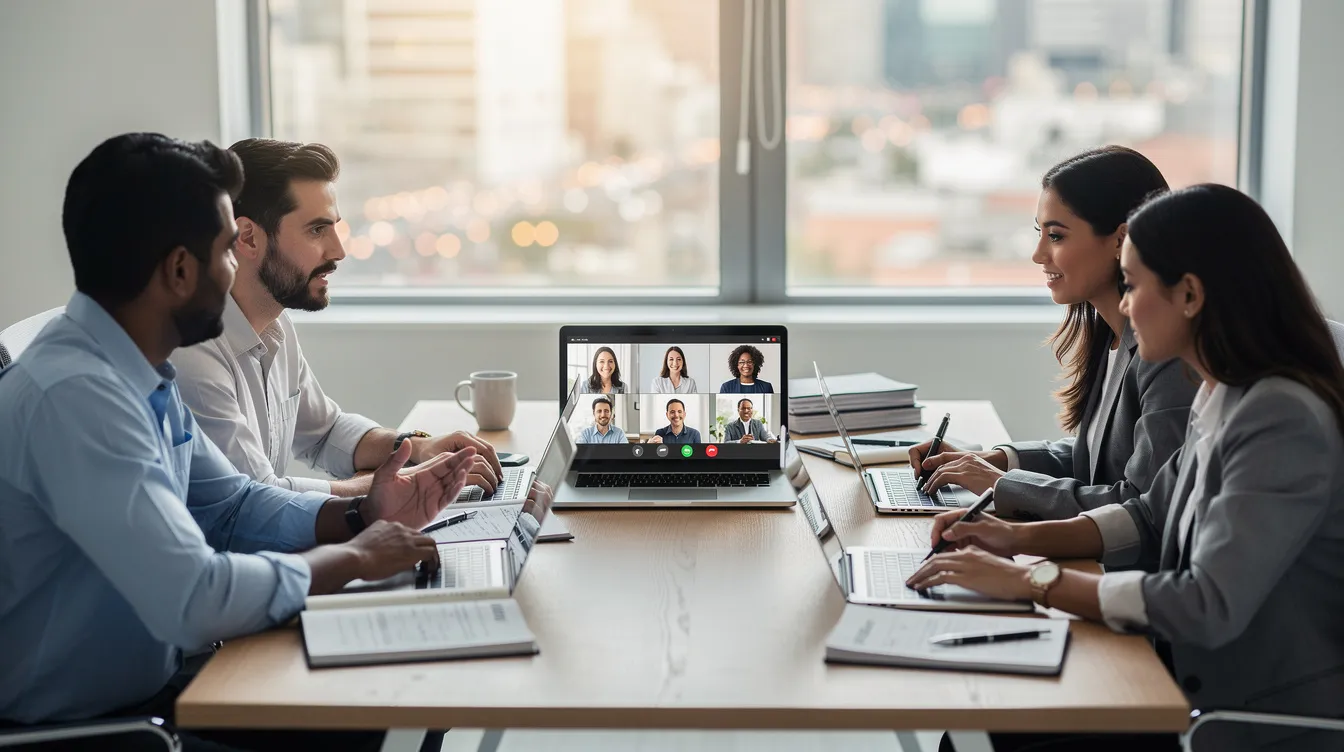
Consistent routines form the bedrock of effective communication, especially for hybrid and remote teams where informal interactions drop by 50% per Harvard Business Review’s 2023 analysis. For teams working remotely, maintaining regular communication routines is crucial to ensure everyone stays connected and aligned despite the lack of physical presence. For a 10-person team, a typical weekly cadence might include 30-minute team huddles on Tuesdays, 30-minute one-on-ones midweek, and async Friday recaps.
The key is making routines time-bounded with agendas published 24 hours prior. Over-meeting costs U.S. organizations $37 billion yearly per Atlassian, so every recurring meeting must earn its place.
Schedule Regular One-to-One Meetings
Weekly or biweekly one-on-ones lasting 25-50 minutes between managers and each direct report or team member should be non-negotiable, including for remote staff via video calls. These meetings cover weekly priorities, roadblocks, career development, and space for sensitive topics that don’t belong in public channels.
Use a shared agenda document—a dated Google Doc works well—to capture topics and action items with owners and target dates. This creates accountability and ensures difficult conversations don’t get avoided.
Keeping these meetings consistent builds trust and prevents issues from going underground. Consider one employee at a mid-sized tech firm: a software engineer’s unspoken overload surfaced during a recurring one-on-one, averting what would have been a two-week project delay. Canceling these meetings at the last minute, by contrast, signals that the relationship doesn’t matter and can erode trust quickly.
Hold Focused Weekly Team Meetings
A standard weekly team meeting of 30-60 minutes with a fixed day and time works for both on-site and distributed teams. Structure matters more than length.
A simple agenda structure includes:
- Quick wins (2 minutes each)
- Key updates on ongoing projects
- Blockers requiring team input
- Decisions needed this week
- Open Q&A with round-robin format
The round-robin approach reduces dominance by 40% per MIT Sloan’s meeting effectiveness research and ensures all team members feel heard. Close by verbally summarizing 3-5 decisions and next steps. This ritual prevents the common problem where people leave meetings unsure what was actually decided.
Follow Up with Clear Written Summaries
Every substantive meeting should generate a short written recap within 24 hours. This single habit cuts “where’s that info?” queries by 50% per Asana’s internal metrics.
Use a simple format: date, attendees, 3-7 bullet points of decisions, who owns what, and specific deadlines. Rotate the note-taker role so it doesn’t always fall on the same person and everyone practices concise writing. Store notes in a single searchable place like a shared folder or internal wiki.
Example recap:
March 15 meeting with Marketing/Dev:
Launch delayed to Q2
John owns API fixes by 3/25
Sarah schedules user testing 3/28
All approve budget +10%
Create Psychological Safety and a Culture of Openness
Psychological safety means people feel secure to ask questions, disagree, and admit mistakes without punishment. Psychological safety is defined as being able to show and employ one’s self without fear of negative consequences of self-image, status or career. Creating a safe space is essential, as it allows employees to share their thoughts and concerns openly without fear of negative consequences. Google’s Project Aristotle found it was the top predictor of team performance—teams with high safety were 20-30% more likely to outperform others in productivity metrics.
For business leaders navigating fast-moving projects or organizational change, this is equally important: unsafe teams delay issue resolution by 3x according to Amy Edmondson’s 2024 research. Early bad news is better than late surprises.
Leaders model safety through specific behaviors: admitting their own errors with phrases like “I might be wrong here,” thanking people who bring up hard issues, and actively protecting open dialogue. When someone interrupts or makes dismissive comments in meetings, address it immediately. Sarcasm and eye contact that signals disapproval can create space for fear rather than honest communication.
Remember that psychological safety takes months to build through consistent behavior, but one dismissive comment can damage it in seconds. This isn’t about slogans or posters—it’s about how you respond when someone shares bad news or crossed arms in disagreement.
Make Communication Truly Two-Way
Improving workplace communication means increasing the quality of listening and responses, not just sending more messages. Nonverbal communication—such as facial expressions, gestures, and body language—plays a crucial role in understanding and responding effectively, as it can influence message clarity and trust. Too many teams broadcast information without creating channels for feedback to flow upward.
Before finalizing decisions, explicitly ask for input. This approach boosts buy in by 40% per Deloitte research. The practices below help you communicate effectively in both directions.
Practice Active Listening and Clarifying Understanding
Active listening involves concrete behaviors: no multitasking during calls, summarizing what you heard, and asking “Did I get that right?” before responding.
Example dialogue:
Manager: “So you’re feeling overwhelmed with the quarterly reports?”
Employee: “Yes, the deadlines for reports A and B overlap.”
Manager: “What I’m hearing is that both reports are due midweek, creating a bottleneck. Did I get that right? What support would help?”
Using phrases like “Can you give an example?” helps you confirm understanding rather than reacting to assumptions. This habit reduces preventable errors by 28% in remote settings where nonverbal cues and facial expressions are limited or delayed.
Offer Constructive, Timely Feedback
Vague criticism like “This isn’t good” creates confusion and strained relationships. Constructive feedback names behavior, impact, and expectations using a simple framework:
Situation-Behavior-Impact-Next Step example:
“In yesterday’s demo (situation), you skipped the metrics section (behavior), which confused stakeholders about ROI (impact). Next time, include the top 3 KPIs (next step).”
Frequent, small feedback moments after a presentation or at the end of a sprint create better communication habits than annual reviews alone. This applies in both directions—managers to employees, employees to managers, and peer-to-peer. Teams with regular feedback see 14.9% lower turnover per Gallup.
Choose the right medium: private one-on-ones for sensitive topics, written recaps for performance expectations, and quick messages for praise. Constructive criticism delivered publicly can damage trust; honest communication delivered privately builds it.
Provide Safe, Confidential Feedback Channels
Sometimes co workers need confidential or anonymous ways to raise concerns about workload, behavior, or compliance issues. Options include quarterly anonymous surveys, digital suggestion boxes, or confidential conversations with HR.
Clearly communicate how feedback will be used, who will see it, and how results get shared back. Acting transparently on survey findings—like adjusting meeting loads after employees flag overload—builds trust 35% faster than ignoring input. Anonymous surveys with clear follow-through see 70% higher response rates per SurveyMonkey 2024.
Adapt to Different People, Cultures, and Generations
Colleagues bring diverse communication styles, cultural norms, and comfort levels with technology to work in 2026. Understanding these differences helps teams collaborate more effectively.

Recognize and Flex to Communication Styles
People vary between direct versus diplomatic communication style preferences, and detail-oriented versus big-picture approaches. Noticing these patterns helps you adjust: giving more context to some colleagues, being more concise with others. Understanding and adapting to different communication styles can positively influence team dynamics by improving collaboration, reducing misunderstandings, and enhancing overall productivity.
Ask teammates explicitly how they prefer to receive information and document preferences in a shared place. One manager sends data visualizations to a detail-oriented engineer and narrative briefs to executives, lifting satisfaction 22% per SHRM research. Reflect on your own default style and where it may unintentionally create friction.
Navigate Cultural and Language Differences
Global teams often interpret tone, directness, and silence differently—silence might signal agreement in one culture and confusion in another. These cultural differences can cause accidental conflict without clear norms.
Simple practices help: avoiding idioms, summarizing key decisions in writing, and checking in with colleagues who seem unusually quiet on group calls. A Berlin-San Francisco team that clarified 48-hour async response norms slashed conflicts by 45%. Allow extra time for colleagues using a second language to process questions during difficult conversations.
Balance Generational Communication Preferences
Multigenerational teams differ in tool comfort and immediacy expectations. Gen Z shows 65% preference for chat apps versus Boomers’ 55% preference for email per Deloitte 2025 research.
Set team norms that respect different preferences while moving work forward: official decisions via email, quick questions via chat. Use team discussions or surveys to learn actual preferences rather than making age-based assumptions. Provide light training on newer communication tools to bring everyone to baseline confidence. Team leaders can support multigenerational teams by setting clear expectations, encouraging open communication, and fostering an inclusive environment. Keep written messages professional with limited slang and careful emoji use so instant messages don’t exclude colleagues.
Use Tools and Channels Intentionally
Communication tools like Slack, Teams, Zoom, and email are only as effective as the norms around them. Some organizations also use centralized screen-based communication platforms to broadcast key updates and reinforce priorities across locations. Choosing the right channel for the message—urgent versus non-urgent, complex versus simple—reduces stress and interruptions by 30% per Asana research.
Match the Message to the Medium
Different situations call for different channels:
- Email: Non-urgent items requiring a record, policy announcements
- Chat apps: Quick updates, simple questions, time-sensitive coordination
- Video calls: Nuanced discussions, problem solving, relationship building
- Phone: Urgent blockers requiring immediate resolution
Establish team agreements like “no major feedback by chat” and “project decisions must be documented in writing.” Digital communication works best when norms are explicit. Reliable async communication is especially critical for teams spread across time zones.
Improve Remote and Hybrid Communication
Remote and hybrid setups bring specific challenges: fewer informal touchpoints, time zone gaps, and Zoom fatigue (up 25% in sessions over 60 minutes per Stanford research). Teams working remotely have unique communication needs, making it essential to maintain regular virtual meetings and foster connection despite the lack of physical presence.
Create consistent rituals like virtual daily stand-ups, weekly demos, or monthly virtual coffees. Set norms for video calls including camera-optional for long meetings, clear agendas, and scheduled breaks. Use shared documents and project boards so information stays accessible without attending every meeting live. For hybrid meetings, ensure microphones capture in-room discussion and remote participants can contribute equally.
Plan for Technology Glitches and Overload
Tech failures—frozen video, audio drops, app outages—happen to roughly 20% of meetings per Owl Labs 2025 data. Have backup plans ready: dial-in numbers, alternate platforms, and clear protocols for switching to async updates.
Address communication overload from too many channels, notifications, and overlapping group chats. One team simplified from 15 channels to 5, seeing stress drop 28% and clarity improve. You can also repurpose passive digital real estate, like screensavers for internal communication, to share key updates without adding yet another chat channel. Periodic channel cleanups and thoughtful use of @mentions make a real difference in work environment quality.
Reinforce Key Messages and Monitor Progress
People rarely absorb important messages the first time—research suggests 7-20 repetitions for retention. Plan intentional repetition of strategic priorities across channels and over weeks. New Q3 2026 priorities should appear in all-hands meetings, follow-up emails, and team-level discussions.
Track simple indicators of communication health: fewer rework incidents (target 15% reduction), improved survey scores (10-20 point gains), and shorter decision cycles. Schedule quarterly check-ins where teams discuss what’s working and what needs adjustment.
Improving communication is a continuous practice, not a one-off project. McKinsey longitudinal studies show teams with sustained focus on communication habits see 21% productivity gains. Start with one tactic this week and build from there.
Frequently Asked Questions (FAQ)
How long does it usually take to see improvements after changing communication habits?
Small changes like structured meeting recaps show benefits within 2-4 weeks—teams often report 20% faster decisions. Deeper cultural shifts like building psychological safety typically take 6-12 months of consistent behavior. A mid-size team implementing one-on-ones, weekly meetings, and written recaps over a single quarter can expect noticeable improvement in alignment and reduced confusion by month two, with trust-based gains emerging by month four.
What if my team feels like there are already too many meetings?
Audit all recurring meetings for purpose, length, and attendees. Remove or shorten those that don’t clearly add value. Replace some status meetings with async written updates while preserving high-value live discussions for decisions and relationship-building. Try a 30-day trial with a leaner schedule and gather information through feedback surveys to assess impact before making permanent changes.
How can I improve communication if I’m not a manager?
Individual contributors can model effective communication skills by sending clear recaps, asking clarifying questions, and suggesting shared docs or agendas. Propose small experiments like a weekly written update to your team leader with concrete benefits outlined. Peer-to-peer improvements often spread informally and can influence managers over time through demonstrated results.
How do I handle a colleague who constantly interrupts or dominates conversations?
Address the behavior calmly and specifically. In the moment, redirect with phrases like “Let’s hear Maria’s point first.” For persistent issues, have a private conversation using nonverbal signals of openness and assertive communication. Set team ground rules like one speaker at a time and hand-raise functions in video calls. If direct attempts don’t lead to change, involve a manager or facilitator.
What’s the best way to document our team’s communication norms?
Create a one-page team communication charter stored in a shared workspace. Include channels, response-time expectations, meeting cadences, and escalation paths. Review and update at least twice yearly or after major changes like new tools or restructuring. Link this charter in onboarding materials so new team members in 2026 and beyond start with clear expectations from day one.